by admin | Dec 20, 2022 | Osteoarthritis, Mesenchymal Stem Cells, Stem Cell Research, Stem Cell Therapy
Osteoarthritis (OA) is the most common form of arthritis and affects an estimated 25% of adults in the United States. Characterized by pain, stiffness, and inflammation in the joints of the body, OA is most frequently observed in the knees, hands, hips, and spine.
OA is one of the leading causes of disability with an annual cost of medical care and lost earnings exceeding $300 billion. With over 250 million people affected by OA worldwide, the combination of aging, obesity, and increased incidents of oxidative stress is causing the condition to become increasingly prevalent.
To date, treatment and medical interventions – including exercise, physical therapy, lifestyle modifications, and prescription and over-the-counter medications – have been successful in managing symptoms, reducing pain, and maintaining joint mobility, but have not been able to promote the regeneration of degenerated tissue.
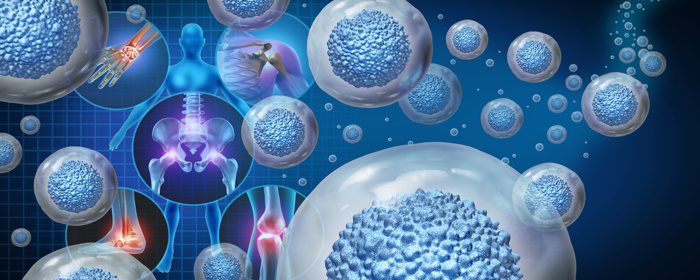
Stem cells, and specifically mesenchymal stem cells (MSCs), have been identified as a potential therapy option for OA. In this review, Zhu et al. summarize the pathogenesis and treatment of OA and review the current status of MSCs as a potential treatment option for the condition.
In reviewing the pathogenesis of OA, the authors highlighted the fact that OA is a dynamic and progressive degenerative disease that is primarily caused by the imbalance between restoration and destruction of the joints; the disease is also significantly influenced by environmental, inflammatory, and metabolic aspects.
The authors highlight that the primary goals of current OA treatment methods are to reduce pain, slow progression, and preserve and improve joint mobility and function.
As researchers continue to search for therapies that encourage the regeneration of damaged articular cartilage and the alleviation of inflammation, they’ve turned their attention to a number of stem cell-based therapies, such as autologous chondrocyte implantation (ACI). While ACI has received FDA approval, unexpected dedifferentiation, and joint invasiveness during harvest limit the availability and usefulness of this application.
Fortunately, MSCs have not been found to demonstrate limitations similar to those observed in ACI and are considered novel therapeutic agents for the treatment of OA. Prized primarily for their ability to stimulate cartilage formation and for their vascularization, anti-inflammation, and immunoregulation, MSCs are sourced from different types of stem cells, including bone marrow (BM-MSCs), adipose tissue (AD-MSCs), and umbilical cord (UC-MSCs). Zhu et al. summarize the characteristics, advantages, and disadvantages of each of these MSC sources in this review.
The authors point out that several clinical trials have proven both the safety and potential efficacy of BM-MSCs, AD-MSCs, and UC-MSCs in the treatment of OA. However, the authors also point out that several of these trials were conducted with limited samples, without rigorous controls, and with relatively short-term follow-up. Considering this, Zhu et al. call for additional clinical trials using larger samples, more rigorous controls, and additional long-term follow-up. In addition, the authors also call for additional considerations to further enhance the efficacy in clinical trials, including cell density, time and location for MSC transplantation, and pretreatment of MSCs by inflammatory cytokines.
The authors conclude that while stem cell-based therapy, and specifically MSCs, demonstrate great potential for the regeneration of new cartilage and strong immunoregulatory capacity, the identified limitations and risks of MSC-based therapy should be realized and treated carefully.
Despite the identified risks and limitations, MSC-based therapy for the treatment of OA might achieve better efficacy in regenerative medicine, especially when administered in combination with other treatment options.
Source: “Mesenchymal stem cells in osteoarthritis therapy: a review – NCBI.” 15 Feb. 2021, https://www.ncbi.nlm.nih.gov/pmc/articles/PMC7868850/.
by Stemedix | Dec 19, 2022 | Regenerative Medicine
Regenerative medicine, also known as stem cell therapy, uses the body’s natural healing response to promote tissue regeneration and repair. While the field is still developing, its benefits span many applications, from treating chronic illnesses to restoring function after sports injuries.
The most common treatments in regenerative medicine are stem cell therapy and platelet-rich plasma (PRP). Both methodologies start with the patients’ cells, genuinely capitalizing on self-healing and offering surprising benefits.
Alleviating Chronic Pain
Stem cell and PRP therapy introduce healing cells into damaged areas. Those cells can reduce inflammation, build new tissue, and prevent scar tissue from forming.
Patients might see the most benefits from using these therapies to alleviate pain from soft tissue injuries, including sprained ligaments, torn tendons, and strained muscles. In addition, new research shows promise for the treatment of degenerative conditions, such as osteoarthritis and degenerative disc disease.
Reduce the Use of Long-Term Medications
Traditional medical solutions for injuries or chronic pain include pain relievers or corticosteroid injections. Unfortunately, prolonged or excessive use of some medications harms your overall health.
Additionally, corticosteroid injections can cause more damage to your cartilage, tendons, nerves, and joints, despite temporarily alleviating pain symptoms.
Regenerative medicine treatments aim to heal the underlying cause of pain, not temporarily mask symptoms, reducing patients’ reliance on medications for relief.
Improve Healing Speed
Specific tissues and injuries take longer to heal than others. For example, the body’s healing process slows with age, lengthening the recovery period even for minor injuries. In addition, more severe injuries often take longer to heal.
Generally, slow-healing injuries are those that affect tissues with little blood supply, such as tendons or cartilage. Since platelets and stem cells travel through the blood to promote healing, injuries to these tissues take longer to recover.
Supplying damaged tissue with an extra boost of growth factors through PRP or stem cell therapy can help speed up the healing process.
Low Risk of Side Effects
When possible, regenerative treatment start with the patient’s own healing cells. As the treatment comes from the patient, there is little risk of rejection, infection, scarring, or heavy bleeding.
Overall Resilience and Strengthening
The effects of regenerative medicine can support long-term health and resilience. These treatments can potentially continue to strengthen the treated area even after healing as the tissues become more resilient and robust.
Regenerative medicine offers versatile, minimally invasive options to restore damaged tissue for more comprehensive healing. As science continues to develop these treatments, many patients are already enjoying the benefits of regenerative medicine. To learn more about the benefits of regenerative medicine, contact us today!
by Stemedix | Dec 8, 2022
Regenerative Medicine St. Petersburg Regenerative medicine uses the power of the body’s most powerful cells to provide pain relief and healing. Stemedix offers stem cell and platelet-rich plasma (PRP), therapies to alleviate chronic pain. These treatments are often...
by Stemedix | Dec 8, 2022
Regenerative Medicine Tampa FL Regenerative medicine harnesses the power of your body’s most powerful cells for pain relief and healing. Stemedix is a St Pete, Florida-based company that offers stem cell and platelet-rich plasma (PRP) therapies to relieve chronic...
by admin | Dec 6, 2022 | Mesenchymal Stem Cells, Stem Cell Research, Stem Cell Therapy
Mesenchymal stem cells (MSCs) have been widely used in a number of applications designed to aid in the regeneration and healing of human tissue. Prized for their multipotent capacity to differentiate into a variety of other specific cell types, MSCs have consistently demonstrated the ability to seek out damaged tissue while also reducing inflammation and promoting healing.
Recently, the discovery of a specific type of MSC known as circulating mesenchymal stem cells has demonstrated increased potential for the use of MSCs in the regeneration, repair, and engineering of tissue throughout the body.
Circulating MSCs demonstrate characteristics similar to MSCs that are derived from bone marrow and are typically found in very low concentrations in healthy individuals. While these specific MSCs have demonstrated the ability to migrate to the site of damaged or injured tissue like other MSCs, what makes circulating MSCs so interesting to researchers is their distinct genetic profile – especially when compared to bone marrow-derived stem cells (BM-MSCs).
Xu and Li’s review provides a summary of the basic knowledge of circulating MSCs, their potential clinical applications, and the issues of using allogeneic MSCs for clinical therapy.
While these circulating MSCs, also known as peripheral blood-derived MSCs (PB-MSCs), have great potential in the field of tissue engineering and regeneration, they are found in very low quantities within the human body. As a point of reference, Xu and Li point out that the frequency of BM-MSCs in humans under normal conditions is very low and ranges from 1 in 104 to 1 in 105. Compared to BM-MSCs, the concentration of circulating MSCs is even lower, typically around 1 in 108.
Despite their low numbers, researchers have successfully identified and collected PB-MSCs in both animal and human models. In both scenarios, PB-MSCs demonstrated characteristics of cell proliferation and multi-differentiation potential that are similar to those observed in BM-MSCs. In addition, and adding to their potential, PB-MSCs are plastic-adherent, have multi-differentiation potential, and demonstrate the ability to differentiate into a variety of cells.
Adding to the benefits described above, and unlike stem cells harvested from embryonic sources, PB-MSCs are not attached to ethical concerns. In addition, numerous research studies have demonstrated the use of MSCs in a variety of applications, including cardiovascular, bone, and cartilage repair have resulted in general significant improvements in tissue healing and regeneration.
To date, studies specific to circulating MSCs are rare. However, Xu and Li highlight that circulating MSCs, while originally found in the bone marrow and other sources throughout the body, are a special subset of MSCs found in circulation. While additional study is required, early research seems to indicate that the release of these circulating MSCs is tightly controlled by a variety of systematic and local factors, including inflammatory cytokines, hormones, and a variety of growth factors.
There is increasing evidence that indicates MSCs are immunosuppressive cells and that allogeneic MSCs may be used with similar therapeutic efficacy to autologous MSCs. Considering this, Xu and Li conclude that allogeneic transplantation seems to be more promising and a way to ensure that patients can receive treatment at the best time and without significant fear of rejection.
As research continues to explore the potential benefits and drawbacks of circulation MSCs, the authors point out that a lack of standard procedures for therapeutic MSC administration remains a critical issue for the clinical application of MSCs. These critical issues need to be addressed through carefully designed animal and clinical trials before clinical applications of MSCs can be used in patients with certain diseases.
Source: “Circulating mesenchymal stem cells and their clinical implications.” https://www.sciencedirect.com/science/article/pii/S2214031X1300048X.




 St. Petersburg, Florida