by admin | Oct 11, 2019 | Mesenchymal Stem Cells, Exosomes, Osteoarthritis
The field of Regenerative Medicine has shown great promise for helping those with a variety of chronic diseases, including arthritis. Indeed, data on the potential value of using stem cells to address issues relating to arthritis have been growing. While specific stem cells like mesenchymal stem cells have demonstrated therapeutic effects in models of arthritis and other inflammatory diseases, the specific ways in which these cells confer their benefits are not yet well understood. Given that these stem cells contain different types of elements, it is important that research establishes which of these elements is critical to the therapeutic properties of stem cells.
A recent study, published in Theranostics, looked specifically at the different effects that small exosomes and larger microparticles from within mesenchymal stem cells have on the inflammatory processes that occur in arthritis. To conduct their experiment, scientists isolated the exosomes and microparticles from mesenchymal stem cells using an ultracentrifugation technique and then exposed the exosomes and the microparticles to cells of the immune system – specifically, T and B lymphocytes, which are implicated in arthritis.
What the researchers found was that, in their models of arthritis, both the exosomes and the microparticles suppressed the T lymphocyte proliferation that is indicative of inflammation. However, unlike microparticles and even parental mesenchymal stem cells, the exosomes were also able to induce other anti-inflammatory effects. The result of exosome activity was, therefore, more efficient blunting of inflammation.
These results point to the potential of not just stem cells, but specifically the exosomes of these cells, in therapeutically addressing inflammatory arthritis. While more research is needed to understand how these exosomes could actually impact arthritis patients, these data provide hope that stem cells and even just elements of stem cells will help these patients by improving their ability to combat problematic inflammation.
Reference: Cosenza, S. et al. (2018). Mesenchymal stem cells-derived exosomes are more immunosuppressive than microparticles in inflammatory arthritis. Theranostics, 8(5), 1399-1410.
by admin | Oct 9, 2019
WHAT IS Regenerative Medicine for Female Wellness More than just PRP, discover the option of Regenerative Medicine and how it is being used more today to rejuvenate individuals for a more fulfilling lifestyle. Request Information Packet WHAT IS Regenerative Medicine...
by admin | Oct 9, 2019 | Stem Cell Research, Age Management, Stem Cell Therapy
Frailty is a syndrome of weight-loss, exhaustion, weakness, slowness, and decreased physical activity. These features combine to make frail individuals more susceptible to physical, psychosocial, and cognitive impairments. Unfortunately, frailty is rather common among elderly individuals. In one study of over 44,000 elderly adults living in the community estimated the overall prevalence of frailty was 10.7%. While the risk of becoming frail increases with old age, frailty is not a normal part of aging. Instead, the syndrome of frailty is driven by biological processes such as inflammation and stem cell dysfunction.
No specific treatment can prevent or reverse frailty. Indeed, the goal of treatment is to maximize the patient’s functional capacity and overall health. The most widely accepted way to manage frailty is a multimodal and multidisciplinary approach. Frail individuals or those at risk for becoming frail are encouraged to participate in strength training and aerobic exercise to build up a cardiovascular reserve and physical fitness. At the same time, substantial efforts are devoted to helping patients consume enough calories to maintain lean muscle and support their immune function. As appetite diminishes, malnutrition can become an issue, so supplemental nutrition may be needed. Physicians can help patients by optimizing medical treatments and reducing the total number of medications prescribed (i.e. avoiding polypharmacy).
Despite these multimodal treatments, most frail patients tend to get worse over time. One hope of treatment is to slow the rate of decline; however, this is not always possible.
Since frailty is driven by stem cell dysfunction, a reasonable way to prevent or treat frailty could be to provide patients with healthy stem cells. Researchers recently conducted a randomized, double-blind, clinical trial in 30 elderly patients with frailty. Frail patients received an IV infusion of either human mesenchymal stem cells or placebo. The researchers then followed the patients for 6 months to assess the safety and efficacy of the stem cell treatment.
Stem cell treatment resulted in a rather remarkable set of benefits for frail patients. Compared to placebo, patients treated with stem cells performed significantly better on tests of physical strength and stamina. Stem cell-treated patients used calories more efficiently, which is a sign that they were more physically fit than those in the placebo group. Moreover, patients who received stem cells had better lung function at the end of the trial than those in the control group. Interestingly, women who received stem cell treatment reported a substantial increase in sexual quality of life compared to those in the placebo group. Lastly, no patients experienced any treatment-related serious adverse events.
When one considers how difficult it is to treat frailty or even alter its progressive decline, these results are remarkable. Stem cell treatment not only stopped the progression of frailty, but patients actually improved in several important measures including physical strength, physical endurance, lung function, and sexual quality of life. We anxiously await a pivotal clinical trial to confirm these results.
Reference: Tompkins, BA. (2017). Allogeneic Mesenchymal Stem Cells Ameliorate Aging Frailty: A Phase II Randomized, Double-Blind, Placebo-Controlled Clinical Trial. The Journals of Gerontology, Series A, Biological Sciences and Medical Sciences. 2017 Oct 12;72(11):1513-1522.
by admin | Oct 7, 2019 | Health Awareness, Multiple Sclerosis
While researchers have been puzzled over the precise contributing factors behind Multiple Sclerosis (MS) for many years, it is widely believed that risk factors are both genetic and environmental. Recently, more evidence has been uncovered which points to the role of environmental factors, and specifically, diet, in a person’s likelihood of developing the condition. A new study on the influence of diet has been published in The Journal of Nutrition and indicates a link between red meat consumption and a reduced risk of first clinical diagnosis of central nervous system demyelination (FCD), a precursor to MS.
MS Risk & Red Meat Consumption: A Noteworthy Association
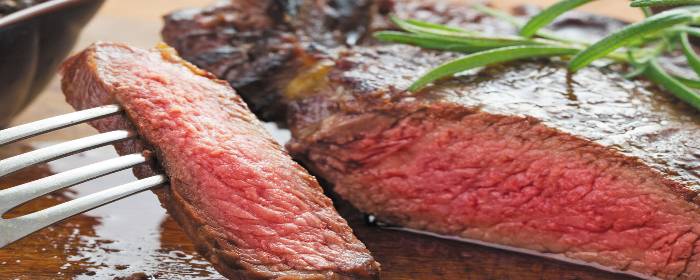
Researchers used data from more than 280 individuals who had experienced FCD, and more than 550 control participants who hadn’t. The participants were ranked according to a points-based diet score which measured how many servings of red meat they consumed as part of a Mediterranean diet. The scores of the people who consumed three or more servings of unprocessed red meat were found to have a reduced risk of FCD, compared to those who consumed two or fewer.
Why Could Red Meat Help?
According to one of the lead study researchers, the nutrients found in red meat, including omega-3 fatty acids, zinc, protein, potassium, vitamin D, and selenium, are all known to contribute to brain functioning. One critical component to the potential benefits is choosing high-quality meats, however. The research shows sources such as grass-fed beef are linked to the reduced risk, and the study participants largely maintained good eating patterns, as they followed a Mediterranean diet. This approach to eating is known to boost cardiovascular health and prioritizes the intake of healthy fats, vegetables, fruits, and whole grains, among other key components.
Who Do These Findings Affect?
The study findings show that for individuals who had a first-degree relative with MS, the risk would drop from 2 to 4% down to 1 to 2.5%. The greatest benefit is seen among individuals who have an identical twin with MS: for this population, the risk drops from 30 to 50% down to 14 to 32%. The findings also suggest that the more unprocessed red meat the individual consumes, the greater the reduction of risk may be.
Ultimately, the benefits of eating red meat appear to be greatest for the populations with a close relative with MS. It’s worth noting, however, that authorities such as the World Health Organization have issued warnings against red meat, and suggest that it could be carcinogenic to humans. Dietary modifications such as these should, therefore, be discussed with a doctor before being introduced into an individual’s daily routine.
by admin | Oct 4, 2019 | Health Awareness
We already know that eating candy all the time isn’t exactly a health-conscious choice. Most are processed and filled with added sugars, giving it a pretty low nutrition-to-calorie ratio. Yet, every diet should leave room to fulfill once-in-a-while cravings, and Halloween certainly qualifies as a special occasion. If you find yourself yearning for some sweets this October, don’t feel guilty about having a piece of candy. Instead, reach for one of the healthier varieties below, and try to pass on the rest.
The Healthiest Halloween Candy
While these snacks certainly wouldn’t be considered superfoods, they pack a more powerful nutritional punch compared to other options. Here are a few varieties to try:
Peanut M&Ms
M&Ms already have an advantage over other candies: since there are lots of them in a pack, you’re more likely to take your time enjoying them as your snack, thereby fulfilling your craving with just one fun-size portion. If the colorful candies are what you’re craving, go for the peanut variety: the nuts have protein and fiber, which can help keep you fuller longer. And, a fun-size pack clocks in at just 90 calories.
Reese’s Peanut Butter Cups
Reese’s lovers, rejoice: the famous cups make the list of more nutritional candies, thanks to the protein-rich peanut butter. Instead of reaching for the double-cup package, consider purchasing a bag of the single-cup varieties. One cup has 110 calories and 2.5 grams of protein, so it won’t derail your healthy eating habits. Plus, you can distribute the rest to any trick-or-treaters who stop by, as Reese’s are a favorite among kids, too!
Snickers
While you might think that the sugary caramel would land Snickers bars on the “bad” list, this candy is actually lower in sugar and higher in protein than most other types. Once again, we have peanuts to thank for the added nutrition. And, if you choose a fun-size bar, you can indulge in your chocolatey snack with just 80 calories and 9 grams of sugar.
The Least Healthy Halloween Candy
While no food has to be considered completely off-limits, be mindful when snacking on the candies below, as they fall at the very bottom of the list when it comes to nutrition.
Candy Corn
With a whopping 22 grams of sugar in just 15 pieces, candy corn defines “empty calories.” Most candy lovers won’t be too dismayed, however, as survey data shows this Halloween staple is actually one of the most hated varieties of the season. If you’re hungry for something sweet, you could have two Reese’s or Snickers for the amount of sugar in one serving of candy corn.
Airheads
Heavily processed, loaded with artificial flavors and coloring, and exceptionally sugary, there are many reasons why dentists loathe these sticky, nutritionally void candies. Not only do they leave you hungry for more since they have no protein or fiber, but they’re also likely to stick to your enamel, leaving you prone to tooth decay. If you just can’t shake the urge to have one, be sure to rinse and brush afterward.
Smarties
Another sugar-rich snack with empty calories, Smarties have carbohydrates and sugar but lack any meaningful nutrients like fiber or protein. Although one roll is only 25 calories, you’re better off getting your sugar fix with something that has a little more substance.
No matter which Halloween candy is your favorite, the best way to enjoy an indulgence this time of year is to do so without feeling bad about it. Halloween only comes once a year, so snack mindfully and remember to fill up on lean protein, plenty of veggies, and fresh fruit during other meals to balance out your diet. That way, you’ll make sure your body is getting all of the nutrition it needs, and there will be plenty of leeway for a piece of candy here or there.
Those with specific dietary needs, for example, those with Diabetes or considered Pre-Diabetes, should consult with their physician on any foods to ensure their health limits.




 St. Petersburg, Florida