
Stem Cell Therapy For Traumatic Brain Injury
WHAT IS Regenerative Medicine for Traumatic Brain Injury For those seeking to potentially manage symptoms and slow the progression of this condition. Regenerative Medicine, also know as Stem Cell Therapy, for Traumatic Brain Injury is a natural alternative option....
Does Smoking Contribute to Chronic Pain?
It’s a well-known fact that smoking can increase the risk of serious disease over the long term, but research also suggests it could make your day-to-day life more difficult, too. In particular, a University of Kentucky study shows smokers are more likely to experience at least one chronic pain syndrome.
While former smokers experience a 20% greater likelihood of experiencing chronic pain, occasional smokers had a 68% increase. For daily smokers, the odds of experiencing chronic pain more than doubled compared to non-smokers. The conditions studied in the analysis included:
- Chronic joint, neck, and back pain
- Persistent head pain
- Nerve problems
- Sciatica
- Widespread pain throughout the body
- Fibromyalgia
Yet, this study isn’t the only one to have associated chronic pain with smoking. In fact, nearly 50 studies conducted between the mid-1970s and 1990s link smoking to lower back pain. Facial pain, nerve pain, and knee pain are among the most prevalent complaints among groups who smoke.
What’s the Connection?
Despite the trend, researchers haven’t yet pinpointed a precise reason why smoking causes chronic pain. Of course, it must also be asked whether smoking is sometimes used as a coping mechanism for individuals experiencing persistent pain. Nonetheless, we do know certain facts about smoking which can, in part, explain how it contributes to pain:
- Nicotine is believed to modulate pain sensitivity. It may help to minimize sensitivity at first, but this effect can wear off over time. When it does, pain may feel worse.
- Smoking decreases oxygen levels in the blood, thereby preventing tissues from getting the critical oxygen they need. Thus, the habit is associated with a number of pain-inducing conditions, including osteoporosis and increased risk of bone fracture.
- Smoking and chronic pain are both commonly seen in conditions such as depression and substance abuse. These conditions might make it more difficult for individuals to manage their pain levels through healthy, effective means.
Cessation for Pain Management
While former smokers are slightly more likely to report chronic pain than individuals who have never smoked, there is a definite decrease in likelihood between former and current smokers. For this reason, researchers believe people who are experiencing chronic pain could benefit from quitting, in addition to other healthy pain management strategies. Likewise, effectively treating chronic pain could potentially increase a smoker’s odds of quitting successfully. Although further research is needed, quitting smoking will always be one of the best things you can do to improve your health, both now and into the future. If you need help in quitting smoking, there are options for you, but perhaps it may be best to start with consulting with your physician.
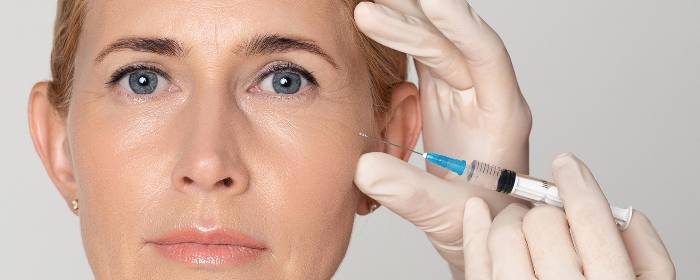
Fat Graft with Stem Cells Treats Aging Skin
No matter how young we may feel, our aging skin often gives our age away. As we age, we lose important proteins in the skin like collagen and elastin. We also lose a thin layer of fat that lies just below the skin. Without this fat and protein, the skin sags and loses its elasticity (“bounce back”) appearing thin and wrinkly.
One of the main skin rejuvenation techniques is to inject fat into aging skin. In its most basic form, a bit of fat is removed from the patient via liposuction and injected into an area of aging skin. These transplanted fat cells give the skin a plumper appearance and seem to turn back the clock on skin aging. However, mature fat cells do not last forever, and many people need to have repeated skin rejuvenation procedures to maintain the effect.
More recently, however, physicians have realized that they achieve better results when they include stem cells in their fat grafts. The mature fat cells provide a beauty benefit immediately, while stem cells help maintain the effect longer. Some physicians have taken the procedure so far as to only inject stem cells and remove mature fat cells completely. While this approach seems reasonable, is unclear whether the stem cell-only approach is actually superior.
While the benefit of fat grafts that include stem cells is widely known, it is unclear how the process works. By understanding the process, researchers hope to learn what provides the strongest antiaging effect. To help them better understand the skin rejuvenation process of fat-derived stem cells, researchers performed liposuction on several patients and then reinjected fat cells and stem cells into areas of aging skin. Three months later, the researchers took samples of the skin to see what effect the combination of fat cells and stem cells had on the skin structure.
While the specific results are quite complex, researchers found that a fat graft that included adipose-derived stem cells improved the elasticity of the skin by creating what is known as an “oxytalan elastic network.” These fibers helped to smooth out the skin and allowed it to retain more moisture than it did before skin rejuvenation treatment.
Perhaps most importantly for patients, the skin rejuvenation procedure left patients with fuller, younger-looking skin.
The researchers concluded that the most beneficial skin rejuvenation approach is to inject a combination of fat cells and stem cells derived from fatty tissue. The benefits were the same as those obtained by injecting stem cells alone. The researchers argue that the combination approach provides a good clinical benefit with the added benefits of being easier to perform, cheaper, and less prone to complications.
Reference: Charles-de-Sá, L. et al. (2015). Antiaging treatment of the facial skin by fat graft and adipose-derived stem cells. Plastic and Reconstructive Surgery. 2015 Apr;135(4):999-1009.

Human Umbilical Cord-Derived Mesenchymal Stem Cells Reverse Cognitive Aging
Cognitive aging describes the changes to our ability to think, remember, and process information that occurs as we age. Cognitive aging begins in adulthood and progresses—if not accelerates—in old age. Over time, the speed at which we process information in the brain slows down, our ability to pay and maintain attention decreases, and we have a harder time making and recalling new memories. While some view cognitive aging as normal because it occurs in all of us, others acknowledge that cognitive aging is something that interferes with a person’s ability to function and diminishes the quality of life.
Currently, there are very few things that can slow cognitive aging and essentially nothing that can reverse it. Physical exercise, mental activity, and a healthful diet can modestly preserve cognitive function as we age. However, once aging occurs in the brain, there is nothing that we can do—currently—to change it.
Some innovative scientists are trying to change that, however. They are focusing on the changes in the brain that take place during aging and using stem cells to reverse that process.
A group of neuroscientists focused their efforts on memory and on the hippocampus, which is the main region of the brain that is responsible for memory. Researchers collected clinical-grade, mesenchymal stem cells taken from human umbilical cords and infused them into aging mice. Aging mice received stem cell treatment once every two weeks for several months.
After three months of treatment with umbilical cord-derived mesenchymal stem cells, mice showed significant improvement in learning and memory tests. Treated mice also had a remarkably improved function in the hippocampus. Surprisingly, stem cell treatment also created new brain cells (i.e. neurogenesis). Indeed, stem cell transplantation in aging mice actually reversed changes in the brain associated with cognitive aging.
These results were conducted in mice and not in humans, however, this research offers a strong foundation for conducting clinical human studies. If these improvements in memory and brain health could be shown in humans, it would be a groundbreaking study. Even in its current form, this research is an exciting breakthrough for the fields of stem cell medicine, neuroscience, and the neurobiology of cognitive aging. It suggests that mesenchymal stem cells may one day be able to reverse cognitive aging.
Reference: Cao N. et al. (2017). Clinical-grade human umbilical cord-derived mesenchymal stem cells reverse cognitive aging via improving synaptic plasticity and endogenous neurogenesis. 2017 Aug 10;8(8):e2996.
 St. Petersburg, Florida