
Autoimmune and autoinflammatory diseases are driven by complex changes in immune regulation. Standard treatments can reduce disease activity, but many conditions remain difficult to control and may require long-term immunosuppression. A peer-reviewed review published in Frontiers in Immunology examines how mesenchymal stem/stromal cells (MSCs) interact with the immune system and why they are being studied as a possible therapeutic approach.
This article summarizes the paper’s findings and places them in context. It is a research review, not a claim that MSC therapy is a proven cure or a substitute for prescribed medical care.
What Are Mesenchymal Stem Cells?
MSCs are multipotent stromal cells found in tissues including bone marrow, adipose tissue, umbilical cord, placenta, synovial tissue, and other postnatal sources. They can support tissue repair and communicate with surrounding cells through direct contact and secreted factors.
The review notes that MSC populations are biologically diverse. Their behavior can vary depending on their tissue source, manufacturing process, dose, delivery method, and the inflammatory environment in which they are placed. These differences are important when comparing studies or considering how laboratory findings might translate into clinical care.
How MSCs May Regulate Immune Activity
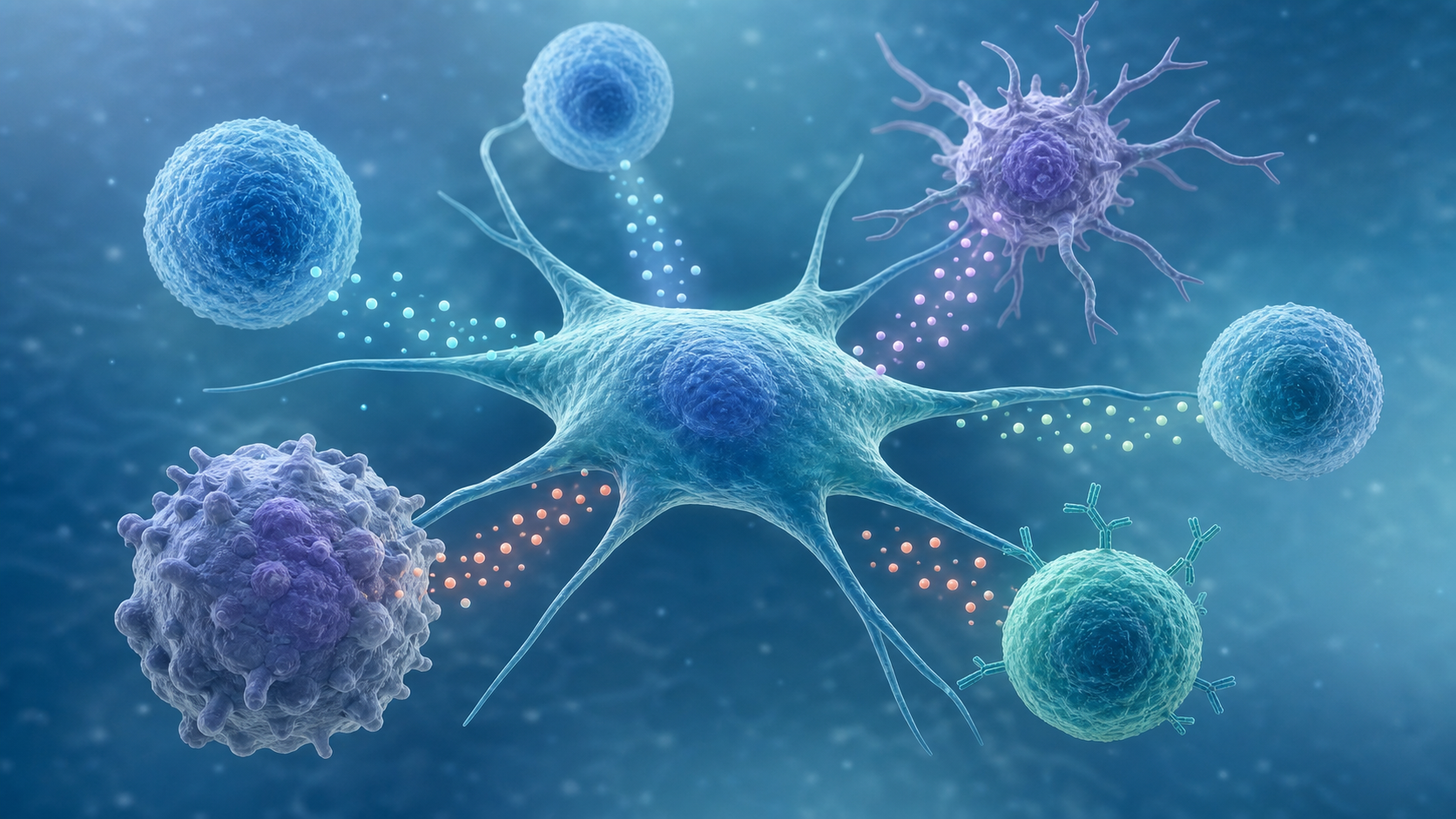
Rather than acting as a single-purpose anti-inflammatory drug, MSCs appear to influence several parts of the immune response at once. The review describes mechanisms involving both innate and adaptive immunity, including:
- Reducing the proliferation and activity of pro-inflammatory T-helper cell populations, including Th1 and Th17 cells.
- Supporting regulatory T-cell activity, which helps maintain immune tolerance.
- Modulating B-cell proliferation, plasmablast formation, and antibody production.
- Influencing macrophages and dendritic cells toward less inflammatory behavior.
- Releasing signaling molecules and extracellular vesicles that can affect inflammation, tissue repair, and fibrosis.
Important mediators discussed in the review include prostaglandin E2, indoleamine 2,3-dioxygenase, transforming growth factor beta, interleukin-10, hepatocyte growth factor, and other cytokines and growth factors. Many of these effects depend on inflammatory signals such as interferon-gamma, a process sometimes described as MSC “licensing.”
MSC Dysfunction in Autoimmune and Autoinflammatory Disease
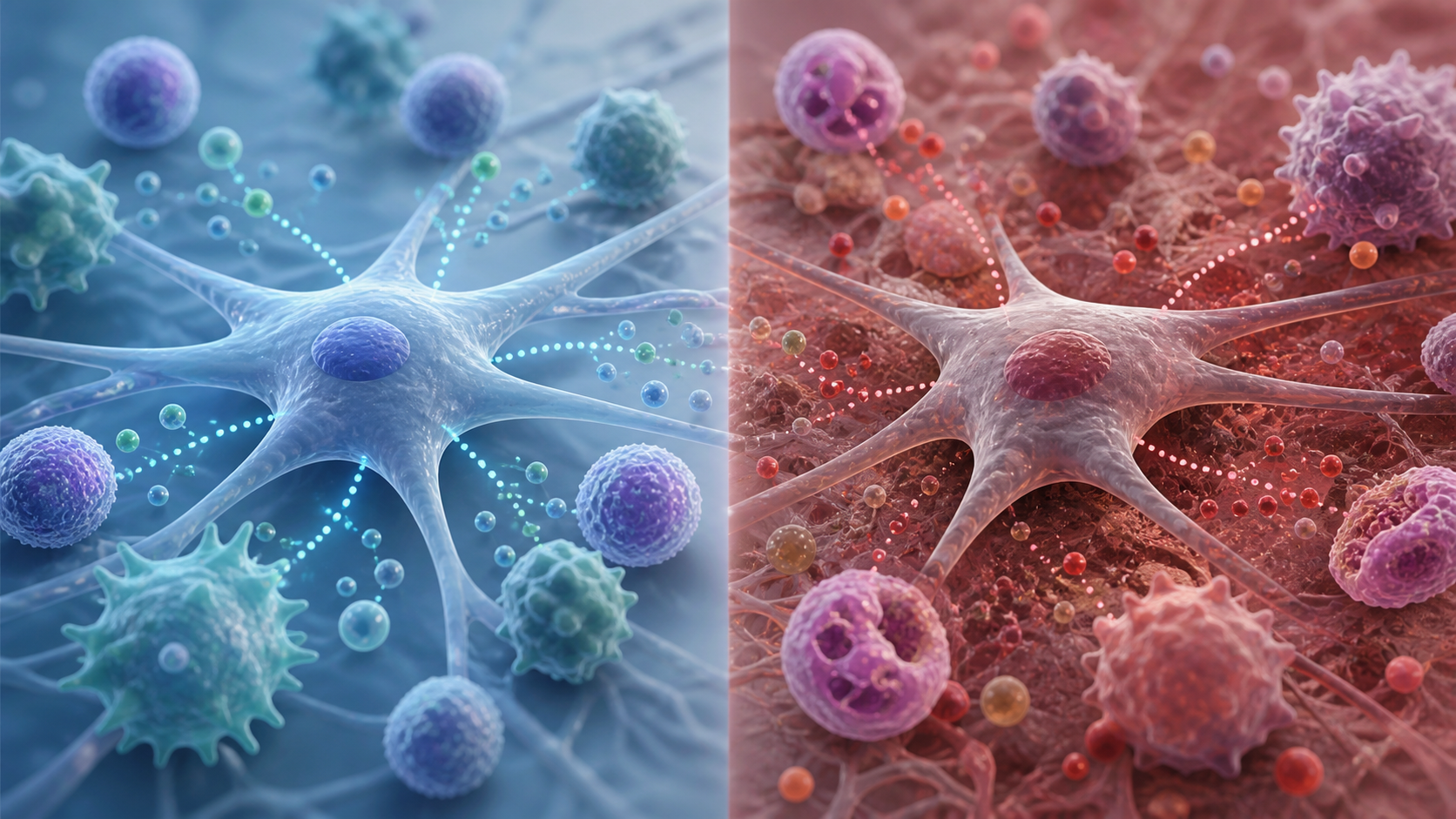
The paper also considers MSCs as participants in disease biology, not only as potential treatments. Persistent inflammation may impair the patient’s own MSCs, changing their ability to proliferate, regulate immune cells, and support tissue maintenance. Reported changes include cellular senescence, altered cytokine secretion, reduced clonogenic activity, and loss of immunomodulatory function.
This concept may help explain why MSC-based therapy is being investigated in conditions such as rheumatoid arthritis, systemic lupus erythematosus, systemic sclerosis, multiple sclerosis, inflammatory bowel disease, and other inflammatory disorders. It also reinforces why treatment outcomes cannot be assumed to be identical across diseases or across cell products.
What Does the Clinical Evidence Show?
The review describes early clinical experience and small studies involving autoimmune and autoinflammatory diseases. Some reports suggest improvements in disease activity or symptoms, particularly in severe or treatment-refractory cases. However, the authors emphasize that much of the evidence remains preliminary, with differences in cell source, preparation, dosing, administration, patient selection, outcome measures, and follow-up duration.
Preclinical findings can show how MSCs might work, but results from cell and animal models do not automatically demonstrate benefit in humans. Larger, well-controlled, multicenter clinical trials with long-term follow-up are needed to determine which patients may benefit, which products are most consistent, and how durable any improvement may be.
Safety and Practical Considerations

Available studies described in the review generally report that serious complications were uncommon, although fever and administration-site reactions have been observed. Potential risks discussed include infection, allergic reactions related to manufacturing materials, cell aggregation or embolization, unwanted tissue formation, and changes in immunogenicity after exposure to inflammatory signals.
MSCs are sometimes described as immune-privileged because they have relatively low expression of certain immune-activating molecules. The review cautions that this property is not absolute. Inflammatory conditions may change cell behavior and increase recognition by the host immune system. Product quality, sterility, characterization, delivery route, and clinical monitoring therefore remain essential.
What Patients Should Take From This Review
MSC research offers a scientifically plausible approach to moderating immune dysregulation while supporting tissue repair. The strongest takeaway is not that MSC therapy has been proven for every autoimmune disease, but that researchers are learning how cell-based therapies may influence several immune pathways at the same time.
Patients considering regenerative medicine should discuss their diagnosis, current medications, treatment history, clinical-trial evidence, expected outcomes, and potential risks with a qualified healthcare professional. A research review cannot determine whether a specific therapy is appropriate for an individual patient.
Conclusion
Mesenchymal stem cells are being studied because they can communicate with immune and tissue cells through multiple mechanisms. The evidence reviewed in PMC10671211 supports continued investigation, particularly for severe autoimmune and autoinflammatory diseases that remain difficult to manage. At the same time, variation among cell products and the limited size and duration of many clinical studies mean that further research is necessary before broad conclusions can be drawn.
Source
Read the full review: Mesenchymal Stem Cells in the Pathogenesis and Therapy of Autoimmune and Autoinflammatory Diseases.
Medical disclaimer: This article is for educational purposes only and is not medical advice. It does not diagnose, treat, cure, or prevent any disease. Do not change prescribed treatment without speaking with your healthcare provider.
Related Treatment Pages