
Scientific Study Review
Featured Article: Mesenchymal Stem Cells for Neurological Disorders
Original article: Read the original study review on PubMed Central
Neurological disorders such as stroke, Parkinson’s disease, multiple sclerosis, amyotrophic lateral sclerosis, Alzheimer’s disease, and spinal cord injury can damage cells and connections within the brain and spinal cord. Because the central nervous system has a limited capacity to regenerate after significant injury, researchers have investigated cell-based approaches to protect vulnerable tissue, regulate inflammation, or support repair.
Mesenchymal stem cells, also called mesenchymal stromal cells or MSCs, are one area of interest. A 2021 review by Andrzejewska and colleagues examined experimental and early clinical research involving MSCs across a range of neurological disorders. The authors also explored an important practical challenge: how transplanted cells can be delivered to, and successfully reach, damaged areas of the brain and spinal cord.
Purpose and Methodology
The authors reviewed preclinical and clinical research involving MSCs in stroke, traumatic brain injury, spinal cord injury, multiple sclerosis, amyotrophic lateral sclerosis, Alzheimer’s disease, Huntington’s disease, Parkinson’s disease, and several less commonly studied neurological conditions. A second major focus was MSC delivery, including intravenous, intra-arterial, intracerebral, intrathecal, and intranasal approaches, as well as strategies to improve cell migration and track transplanted cells.
This publication is a narrative review rather than a randomized clinical trial, systematic review, or meta-analysis and brings together evidence from laboratory research, animal models, early human studies, and clinical trials. The review does not report a systematic search strategy or statistical analysis designed to calculate an overall treatment effect.
How MSCs May Support Neurological Repair
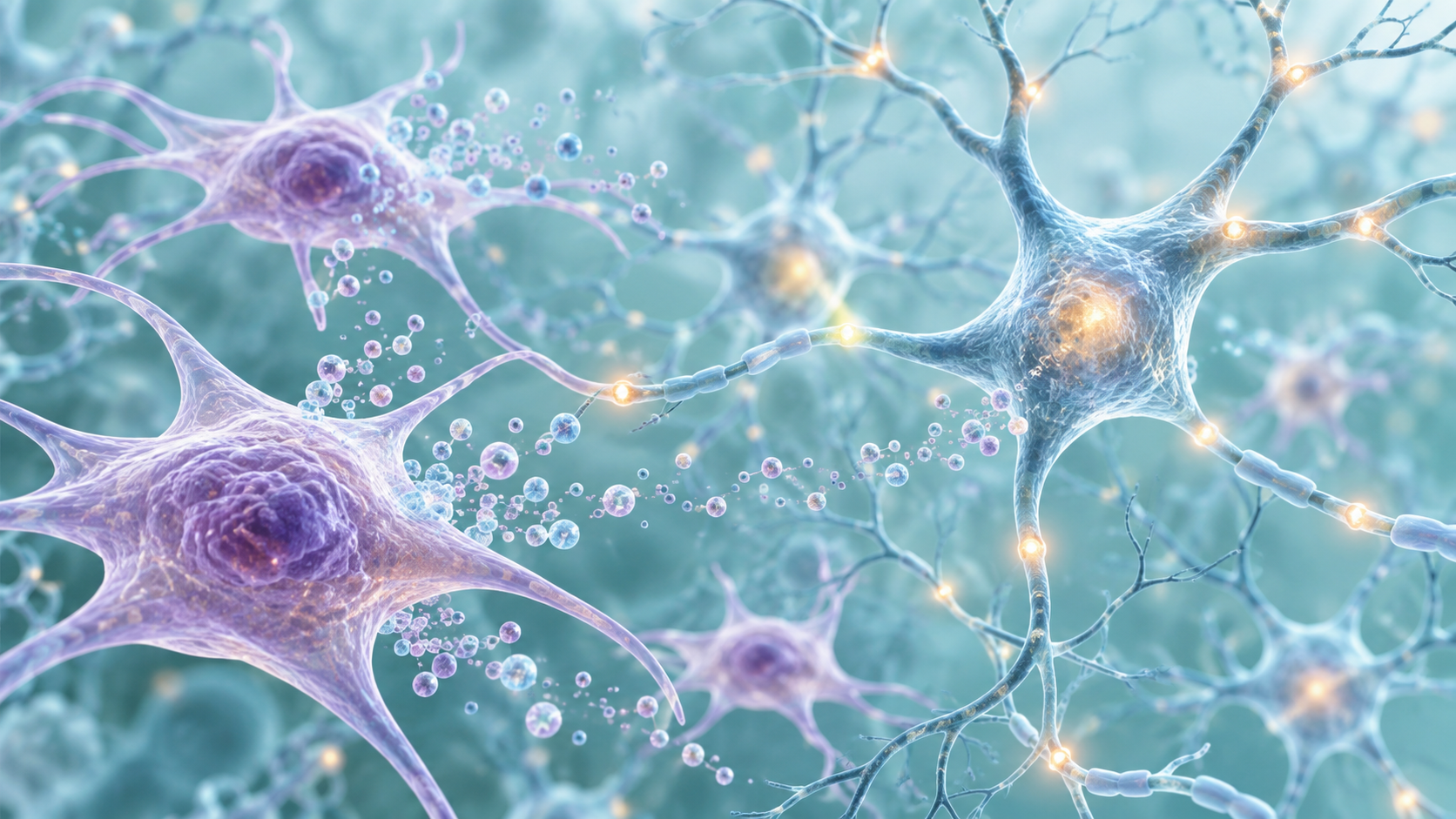
The authors suggest that MSCs should not be viewed primarily as replacement neurons. Instead, many of their proposed effects involve influencing the environment around injured or diseased nervous tissue.
MSCs can release growth factors, cytokines, and other signaling molecules that may reduce inflammation, protect cells from death, promote blood vessel formation, and support the survival or repair of neurons and their connections. Across animal models, researchers have reported effects including reduced neuroinflammation, neuroprotection, axonal remodeling, increased neurogenesis, remyelination, and improved neurological function.
These actions can vary by disease. In experimental stroke, for example, MSC administration has been associated with reduced inflammation and stabilization of the blood-brain barrier. In multiple sclerosis models, MSCs have been associated with reduced inflammatory activity, increased oligodendrocyte activity, and remyelination. Parkinson’s disease models have shown effects involving dopaminergic neurons, inflammation, and alpha-synuclein, a protein closely associated with the disease.
Importantly, much of this evidence comes from animals rather than people.
What the Clinical Evidence Showed
The gap between experimental findings and clinical evidence is one of the most important themes of the review. Animal studies were generally more favorable than human studies, and the authors described MSC therapy for neurological disease as remaining at a relatively early stage of clinical translation. At the time of publication, there was no registered MSC-based product for neurological disorders.
Results also varied substantially by condition.
Early stroke studies generally supported the feasibility and tolerability of MSC administration, with some studies reporting neurological improvement. Parkinson’s disease research included only limited numbers of patients, although small studies reported tolerability, clinical stabilization, or improvements in measures such as motor function and gait.
In multiple sclerosis, most human studies were early Phase I or II trials. Intravenous or intrathecal administration was generally described as feasible and tolerable, and some patients showed stabilization or modest improvement in disability.
Spinal cord injury studies similarly reported sensory or motor improvement in some participants, but imaging did not necessarily demonstrate structural regeneration of the injured spinal cord even when functional measures improved.
Alzheimer’s disease illustrates the difficulty of translating encouraging laboratory findings into patient benefit. The review classified animal results as showing significant improvement but clinical evidence as showing no improvement at that time.
The Challenge of Delivering MSCs to the Brain
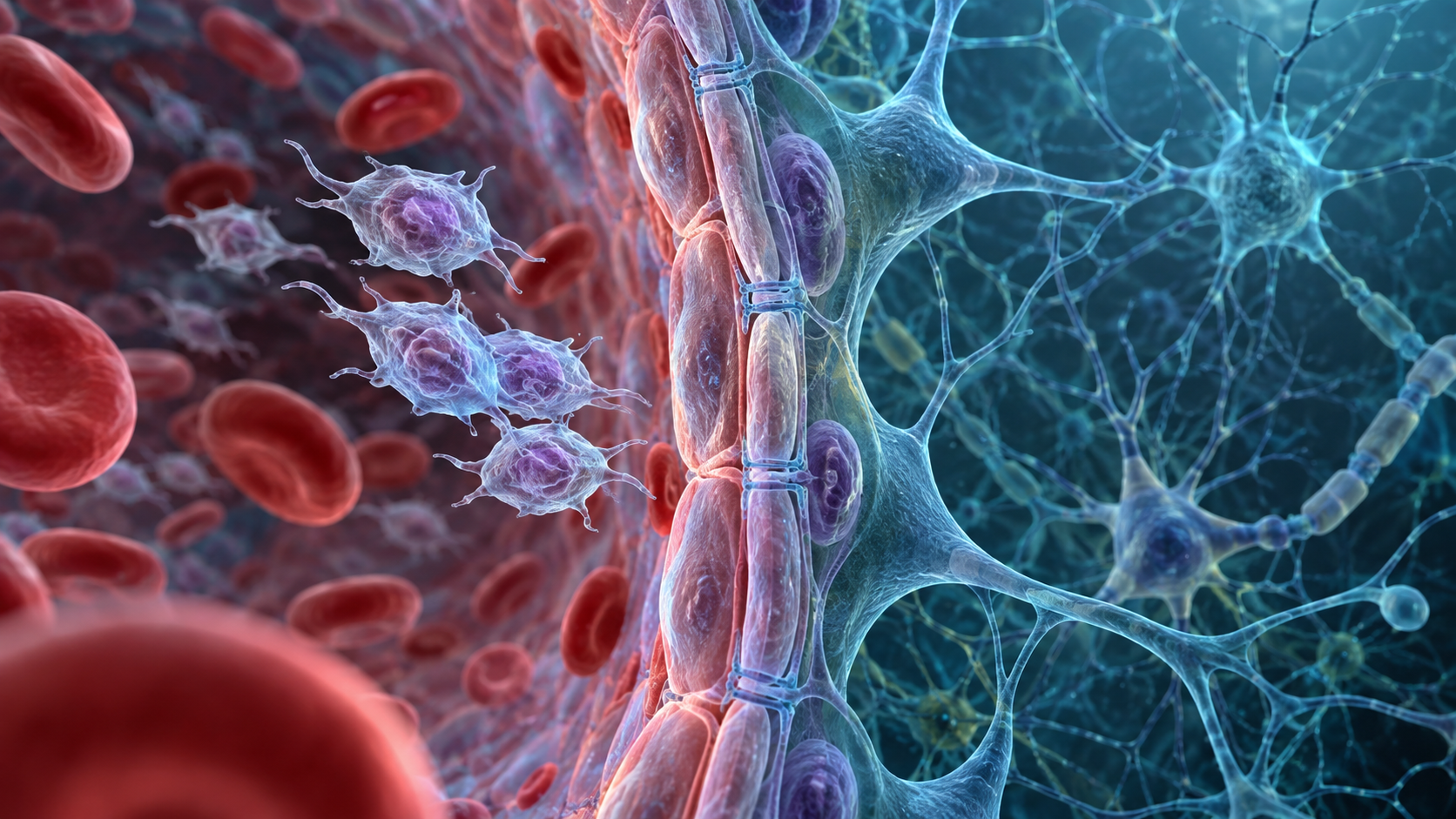
A major focus of the review is how MSCs are delivered to the brain and spinal cord. A therapy cannot depend on cells reaching injured nervous tissue if only a small proportion of those cells arrive at the intended location.
Direct intracerebral injection places a high concentration of cells near the target, but it is invasive and carries associated risks such as bleeding and damage to brain tissue. Intrathecal administration delivers cells into cerebrospinal fluid, while intravenous delivery is considerably less invasive but results in many cells becoming distributed to organs such as the lungs, liver, spleen, and kidneys rather than the brain. Intra-arterial delivery may improve access to the brain but introduces concerns about microvascular obstruction. Intranasal administration is less invasive, but it has not been studied as extensively.
The blood-brain barrier creates another obstacle. The authors explain that systemically administered MSCs do not migrate into damaged tissue as efficiently as immune cells, and their ability to enter central nervous system tissue remains limited. Improving how MSCs are targeted and guided to damaged tissue remains an important area for continued research.
Important Limitations
The review has several limitations that should be considered when interpreting its conclusions. It combines laboratory experiments, animal models, small uncontrolled human studies, and clinical trials, which provide very different levels of evidence. Findings from animal models can help researchers understand biological mechanisms and identify promising therapies, but they do not establish that the same benefits will occur in people.
The neurological conditions included in the review are also very different from one another. Stroke, Parkinson’s disease, multiple sclerosis, Alzheimer’s disease, ALS, and spinal cord injury have different causes, patterns of damage, and disease courses. Positive findings in one condition should not be assumed to apply to another.
Studies also differed in MSC source, preparation, dose, timing, route of administration, disease severity, and outcome measures. Many of the human studies cited were small or early-phase trials designed primarily to assess feasibility and safety rather than definitively establish effectiveness. The authors also note that clinical translation has progressed more slowly than the encouraging animal literature might suggest.
Finally, the review was published in 2021, so its conclusions reflect the evidence available at that time and do not account for clinical research published since then.
What the Review Means for Patients
This review provides a scientific rationale for continued investigation of MSCs in neurological disease. MSCs may influence inflammation, release neuroprotective signals, support blood vessels and nervous tissue, and potentially create conditions that favor repair.
However, biological activity is not the same as proven clinical effectiveness. Much of the strongest evidence described in the paper comes from animal models, while human evidence was generally early, limited, and inconsistent across diseases. The review also makes clear that simply administering MSCs does not guarantee that enough cells will reach the appropriate region of the brain or spinal cord.
Clinical Takeaway
Andrzejewska and colleagues show why MSCs remain an important area of research in regenerative medicine for neurological disorders. Their potential appears to involve multiple mechanisms, including immunomodulation, neuroprotection, trophic signaling, and support for tissue repair, rather than simply replacing damaged neurons.
At the same time, significant translational challenges remain. The authors identify efficient delivery across or around the blood-brain barrier, targeted migration to injured tissue, and improved cell tracking as particularly important problems.
Overall, the evidence supports continued clinical investigation rather than broad conclusions about treatment. Larger, more rigorous controlled trials, disease-specific protocols, improved delivery strategies, and longer follow-up periods are needed to determine which neurological conditions, if any, are most likely to benefit from MSC-based approaches. Patients should not discontinue established neurological treatments or substitute experimental cell therapy for care recommended by a qualified physician based on these findings.
Reference
Andrzejewska A, Dabrowska S, Lukomska B, Janowski M. Mesenchymal stem cells for neurological disorders. Advanced Science. 2021;8(7):2002944. doi:10.1002/advs.202002944. https://pmc.ncbi.nlm.nih.gov/articles/PMC8024997/
Regulatory Disclaimer
This review is provided for educational and informational purposes only and comments on published literature involving experimental cell-based approaches. The findings do not establish that any treatment is safe or effective for any individual and should not be interpreted as medical advice. Patients should consult a qualified physician before changing prescribed care.
Related Treatment Pages