Opens in a new tab

Musculoskeletal Injury

Regenerative Medicine For Musculoskeletal Injury | Stemedix

Regenerative Medicine for Musculoskeletal Injury

Discover the option of  Regenerative Medicine and how it is being used to manage painful and uncomfortable symptoms.

Contact a Care Coordinator

Content Review: Michael Healey, M.Ed., C.A.S. Last Updated: September 2026

What Are Musculoskeletal Injuries?

Musculoskeletal injuries affect muscles, tendons, ligaments, joints, and related soft tissues. They may occur suddenly, such as after a fall or sports injury, or develop gradually through repetitive strain, overuse, or age-related changes. The type and severity of injury, activity demands, symptoms, imaging findings, and overall health help guide evaluation and treatment.

Common Examples and Symptoms

Common examples include:

  • Sprains and strains
  • Tendinopathies, such as tennis elbow, Achilles tendinopathy, or patellar tendon pain
  • Rotator cuff irritation or partial tears
  • Plantar fasciitis or iliotibial-band syndrome
  • Mild-to-moderate meniscus or labral injuries

Symptoms may include pain, swelling, stiffness, weakness, reduced range of motion, instability, or difficulty returning to work, exercise, or sport.

Current Medical Treatments

Treatment depends on the tissue involved, severity of injury, symptoms, and functional goals. Initial care often aims to reduce pain, restore mobility and strength, and support a safe return to activity.

Standard Treatment Categories

  • Rest, ice, compression, elevation, and activity modification when appropriate
  • Physical therapy, strengthening, mobility work, and biomechanical correction
  • Short-term anti-inflammatory or pain-relief medicines when appropriate
  • Bracing, splinting, or assistive devices for selected injuries
  • Corticosteroid or other injections for selected conditions and short-term symptom relief
  • Surgery for complete tears, significant structural damage, or symptoms that do not respond to appropriate nonsurgical care

Regenerative Medicine Research for Musculoskeletal Injuries

Regenerative medicine for musculoskeletal injuries and platelet-rich plasma (PRP) therapy are being studied as injectable biologic approaches for selected tendon, muscle, ligament, and joint conditions. Researchers are evaluating different products, preparation methods, injection techniques, rehabilitation plans, and patient groups.

What Researchers Are Studying

  • Influence inflammation and cellular signaling in injured tissue
  • Be delivered safely and feasibly for selected musculoskeletal conditions
  • Improve pain, function, strength, range of motion, or other patient-reported outcomes
  • Be further evaluated alongside rehabilitation and other established treatments

PRP, cell-based products, and other biologic approaches are distinct. Study results can vary by diagnosis, injury severity, chronicity, product preparation, injection technique, rehabilitation plan, and the outcomes measured.

Note: PRP and stem cell therapies for musculoskeletal injuries are investigational and are not FDA-approved for these uses. Research findings do not guarantee individual results.

How Regenerative Medicine for Musculoskeletal Injuries Is Being Studied

Researchers are studying biologic approaches for specific tendon, muscle, ligament, and joint injuries. Studies assess pain, function, strength, range of motion, imaging findings, return to activity, and safety. This work is helping identify the products, delivery methods, and patient groups that warrant continued clinical study. Regenerative treatment for musculoskeletal injuries remains investigational.

Recent Clinical Studies on Regenerative Treatments for Musculoskeletal Injuries

2025: PRP Reported Faster Return to Play and Higher MRI Healing Rates for Grade 2 Hamstring Injuries

Efficacy of Platelet-Rich Plasma in Grade 2 Hamstring Muscle Injuries: Randomized Controlled Trial — Read Study

This randomized controlled trial included 60 athletes with grade 2 hamstring muscle injuries who received PRP plus rehabilitation or rehabilitation alone. Athletes in the PRP group returned to play an average of about eight days sooner than those who received rehabilitation alone, 26.4 days compared with 34.2 days. MRI evidence of healing at 21 days was also more common in the PRP group, 70% compared with 36.7%, and no adverse events were reported. Together, the faster return to play, higher MRI healing rate, and favorable safety findings provide encouraging, injury-specific evidence supporting continued study of PRP combined with rehabilitation for grade 2 hamstring injuries.

2025: PRP Reported Improved Clinical and Functional Outcomes for Tennis Elbow

Platelet-Rich Plasma Provides Superior Clinical Outcomes Without Radiologic Differences in Lateral Epicondylitis: Randomized Controlled Trial — Read Study

This randomized study compared PRP, corticosteroid, and saline injections for lateral epicondylitis, also known as tennis elbow. The study initially enrolled 50 patients, with 36 patients remaining for the final analysis. PRP produced favorable clinical and functional outcomes at three and six months and outperformed the other groups on measures of arm function, although ultrasound measures did not show significant differences among the treatment groups. Despite the loss of participants during follow-up, the improvements in patient-reported outcomes provide encouraging comparative evidence supporting continued study of PRP for chronic lateral epicondylitis.

2021: PRP Reported Continued Pain and Function Improvements for Partial Supraspinatus Tears

Comparison of a Platelet-Rich Plasma Injection and a Conventional Steroid Injection for Pain Relief and Functional Improvement of Partial Supraspinatus Tears — Read Study

This randomized controlled trial enrolled 32 people with partial supraspinatus tears to receive either an ultrasound-guided leukocyte-poor PRP injection or a corticosteroid injection. Both groups improved at one month, with no significant difference between treatments. At six months, however, the PRP group had better pain and shoulder-function scores than the corticosteroid group and showed continued improvement between one and six months, with no complications reported in either group. Together, the sustained pain and shoulder-function improvements and favorable safety findings provide encouraging comparative evidence supporting continued study of PRP for partial rotator cuff tendon tears.

Could Regenerative Medicine Be Right for You?

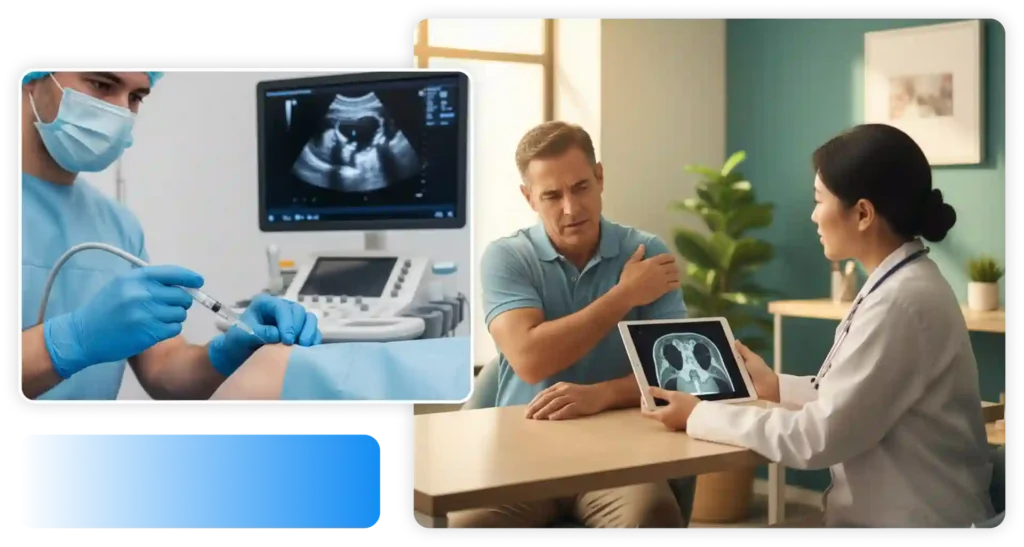
For people with persistent musculoskeletal pain or injury, PRP therapy and other regenerative medicine approaches may be topics to discuss with a healthcare provider. A consultation can help review your diagnosis, imaging, symptoms, prior treatment, activity goals, and rehabilitation plan. You may also wish to learn more about stem cell therapy for osteoarthritis, since the evidence for a particular approach may differ by injury, joint, tissue, and diagnosis.

At Stemedix, we take a patient-centered approach to regenerative medicine, informed by emerging clinical research. Our team reviews your medical history, current treatment plan, and goals to help determine whether an investigational regenerative approach may be appropriate to explore.

Medical Disclaimer

This page is for educational purposes only and does not constitute medical advice.
PRP and stem cell therapies for musculoskeletal injuries are investigational and are not FDA-approved for these uses. Research findings do not guarantee individual results.
Always consult a qualified healthcare professional before making treatment decisions.

References

  1. Desouza C, Shetty V. Efficacy of Platelet-Rich Plasma in Grade 2 Hamstring Muscle Injuries: Results From a Randomized Controlled Trial. European Journal of Orthopaedic Surgery & Traumatology., 2025. PubMed
  2. Kizilkurt T. et al. Platelet-Rich Plasma Provides Superior Clinical Outcomes Without Radiologic Differences in Lateral Epicondylitis. Medicina (Kaunas)., 2025. PubMed
  3. Thepsoparn M. et al. Comparison of a Platelet-Rich Plasma Injection and a Conventional Steroid Injection for Pain Relief and Functional Improvement of Partial Supraspinatus Tears. Orthopaedic Journal of Sports Medicine., 2021. PubMed

U.S. Food and Drug Administration. Important Patient and Consumer Information About Regenerative Medicine Therapies. FDA

Speak with a Care Coordinator today for a more accurate assessment of your condition and therapy options.

Speak with a Care Coordinator

Patient Testimonials

Please see the comments and personal video testimonies on our website to see our patients’ experience and their personal journey to wellness with Stemedix.

How Stemedix Helps You Heal

Professional Medical Care

Heal Box | Stemedix
Heal Box | Stemedix

Our Board-Certified Physicians specialize in regenerative medicine. They stay abreast of the latest developments in stem cell research. Each patient is screened and reviewed before being approved for therapy.

Advanced Therapy

Advanced Therapy Multiple Sclerosis | Stemedix

Each patient is thoroughly reviewed to ensure their safety for treatment. The physicians will then determine potential benefit candidacy. If approved, a customized treatment plan is offered for the patient.

Specialized Care

Specialized Care Multiple Sclerosis | Stemedix

Stemedix can help coordinate patients with necessary wheelchair transportation, medical equipment, and Care Giving services as needed during their stay. Your Care Coordinator is available for questions and assistance.

Latest Articles on regenerative medicine

Common Fibromyalgia Triggers to Avoid
Common Fibromyalgia Triggers to Avoid | Stemedix

Can PRP or Regenerative Therapy Help Fibromyalgia Symptoms Long-Term?

Platelet-Rich Plasma (PRP) therapy uses growth factors from a patient's own blood to target inflammation and support tissue repair, which may help with fibromyalgia-related pain and fatigue. Research on long-term outcomes is still developing, and results vary by patient. At Stemedix, we design personalized regenerative medicine plans based on each patient's diagnosis, since fibromyalgia symptoms…

Umbilical Cord-Derived MSCs and Multiple Sclerosis: Exploring the Impact of Treatment Dose

Umbilical Cord-Derived MSCs and Multiple Sclerosis: Exploring the Impact of Treatment Dose

Exploring a Different Approach to Multiple Sclerosis Multiple sclerosis, or MS, is a condition in which inflammation and abnormal immune activity damage the brain, spinal cord, and nerves over time. Current treatments can help control relapses and slow progression, but researchers continue to explore new approaches that may also support the body's natural repair processes.…

Umbilical Cord-Derived MSCs and Type 1 Diabetes: Helping Preserve the Body’s Own Insulin Production

Umbilical Cord-Derived MSCs and Type 1 Diabetes: Helping Preserve the Body’s Own Insulin Production

Protecting the Insulin the Body Can Still Make Type 1 diabetes develops when the immune system attacks the pancreatic beta cells responsible for producing insulin. By the time someone is diagnosed, many of these cells have already been lost, but some insulin-producing ability may still remain. Protecting that remaining function could potentially help slow the…

Read all blogs

Forward-Thinking Medicine for Musculoskeletal Injury

Contact us today and let Stemedix provide a professional service accompanied by one of our Care Coordinators to ensure you have the best experience possible!

Contact a Care Coordinator
Subscribe To Our Newsletter

Join our mailing list to receive the latest news and updates from our team.

"*" indicates required fields

This field is for validation purposes and should be left unchanged.
Quick Summary

Regenerative Medicine for Musculoskeletal Injury — At a Glance