
Improving mobility and motor skills after regenerative therapy for Parkinson’s disease often begins with clear education, guided planning, and realistic expectations. At Stemedix, we help you review available options through a structured process designed for patients with an existing diagnosis. Many people seeking support want to better manage movement changes linked to
Parkinson’s disease symptoms such as stiffness, tremors, slower motion, and balance concerns. Our team works with you to review medical records, coordinate evaluations, and discuss whether regenerative therapy may fit your care goals. You receive direct guidance, organized support, and physician-reviewed recommendations based on your history. This article explains mobility changes, motor skill factors, and what you may expect during the evaluation process.
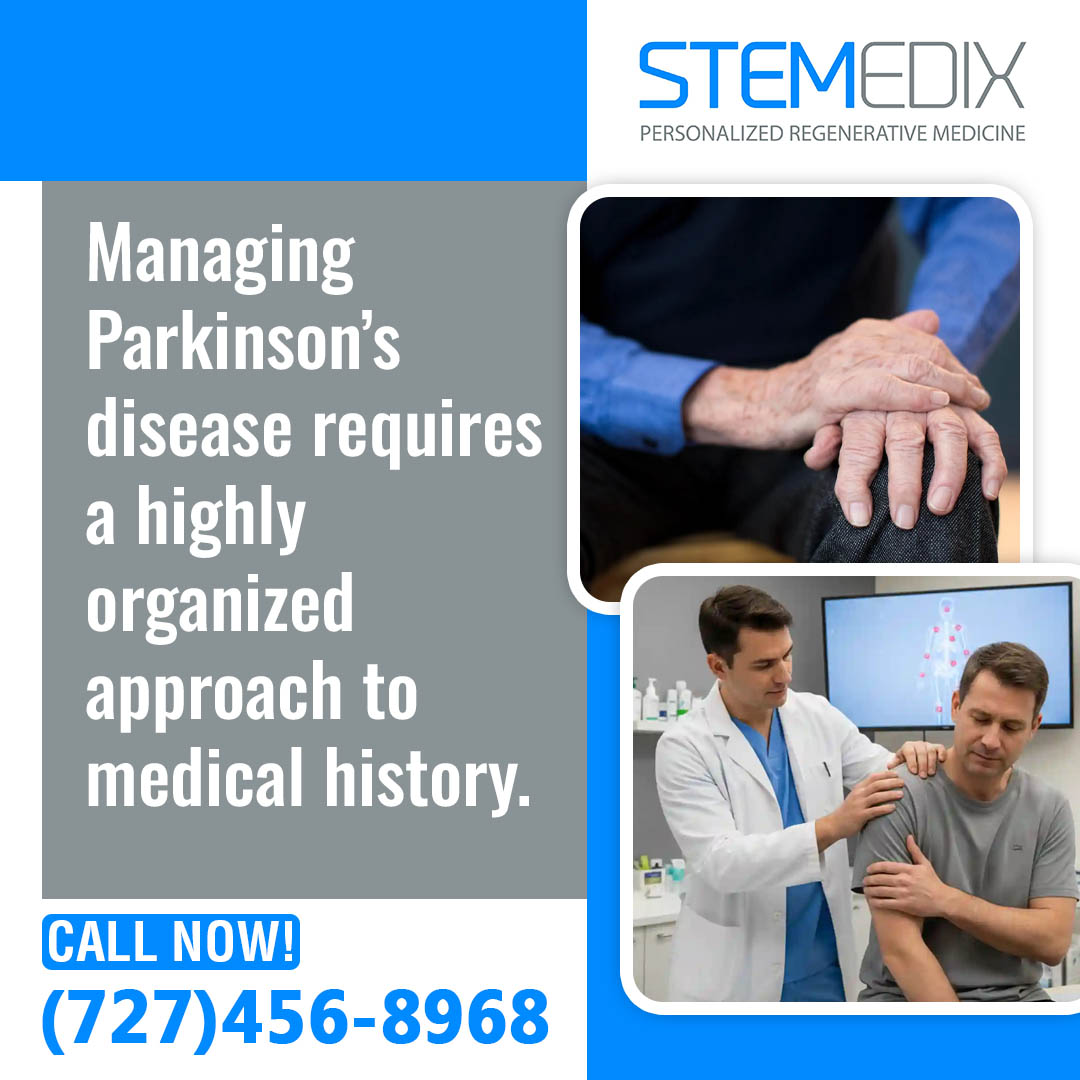
Understanding Parkinson’s Disease and Motor Function Changes
Parkinson’s disease is a neurological condition that affects movement control and coordination. Parkinson’s disease develops as nerve cells in the brain that produce dopamine become impaired over time. Dopamine is a neurotransmitter that helps the brain send smooth and organized signals to the muscles. These signals guide walking, posture, hand movement, facial expression, and reaction speed. As dopamine levels decline, movement can become slower and less controlled.
The Parkinson’s Foundation reports that nearly 1.1 million people in the United States are living with Parkinson’s disease, with about 90,000 new diagnoses each year. These numbers show how many individuals and families face mobility changes linked to this condition.
Common Parkinson’s Disease Symptoms Linked to Mobility
Mobility-related symptoms include tremors, stiffness, and reduced movement speed. These symptoms may change from day to day. Some people experience mild limitations early, while others notice a broader effect on routine activities.
Common mobility-related concerns include:
| Symptom | Possible Daily Impact |
| Tremors | Difficulty holding objects steadily |
| Stiffness | Reduced flexibility during movement |
| Slower motion | Longer time to complete tasks |
| Balance changes | Unsteady walking or turning |
| Fine motor decline | Trouble writing or buttoning clothing |
You may experience one symptom more than another. Symptom patterns often differ between individuals.
Progression of Motor-related Limitations
Motor function changes may increase over time depending on neurological progression in Parkinson’s disease. Progression is influenced by age, health history, symptom type, response to care, and activity level. That is why regular review of your symptoms and function can help guide next steps.
Tracking changes may include:
- Walking distance tolerance
- Hand coordination tasks
- Transfer ability (sit to stand)
- Balance confidence
- Daily activity performance
If you are exploring supportive options after diagnosis, a personalized review can help identify where mobility challenges affect you most.
The Role of Regenerative Therapy for Parkinson’s Disease
Regenerative therapy is an investigational approach focused on supporting cellular and neurological function. This approach studies biological processes that may relate to brain cell communication and repair activity.
Current research looks at how biologic materials may interact with tissues involved in movement control. These studies aim to evaluate whether cellular support may relate to motor performance, balance, and physical function.
Overview of Regenerative Therapy for Parkinson’s Disease
Regenerative therapy for Parkinson’s disease examines how biological materials may interact with damaged neural cells. The focus is on supporting natural cellular processes that influence neurological function.
Parkinson’s disease is linked to the loss of dopamine-producing neurons in the brain. The movement symptoms often appear after substantial dopamine cell loss has occurred. Because of this, researchers continue to study therapies that may support the environment around affected cells.
Cellular Support Mechanisms Under Study
Cellular support mechanisms refer to biological functions involved in the communication, repair, and maintenance of cells. These mechanisms are studied in relation to Parkinson’s disease and motor function changes.
Cells rely on chemical signals, energy production, and inflammation control to function well. If these systems are disrupted, movement-related symptoms may become more noticeable.
Neuroinflammation Response
Neuroinflammation refers to immune activity within the nervous system. Research evaluates how this response may influence brain cell activity in Parkinson’s disease. Published studies have reported inflammatory changes in the brains of people with Parkinson’s disease, which has led to growing interest in therapies that target this response.
Cellular Signaling Activity
Cellular signaling activity refers to communication between brain cells. This communication supports movement control and is relevant to Parkinson’s disease symptoms. Signals between neurons help regulate muscle timing, gait, and coordination. Changes in these pathways may affect mobility.
Tissue Repair Pathways
Tissue repair pathways involve biological processes that support cellular maintenance. These pathways are studied in regenerative therapy research. Researchers continue to examine how repair pathways may relate to nerve cell survival and function.
Focus on Neurological Function and Motor Activity
Research focuses on how regenerative approaches relate to movement and neurological support functions. Motor activity depends on efficient signaling between brain regions and muscles affected in Parkinson’s disease.
You deserve clear guidance while reviewing investigational options. Stemedix provides structured support for patients exploring regenerative therapy pathways.
Mobility and Motor Skill Considerations After Regenerative Therapy
Mobility outcomes after regenerative therapy for Parkinson’s disease vary depending on neurological condition and individual health history. Patients with Parkinson’s disease may experience different movement limitations based on disease duration, age, activity level, and prior functional decline. Parkinson’s disease affects more than 10 million people worldwide, which shows how varied symptom presentation can be across patient groups.
Changes in motor function are monitored through structured clinical review and patient records. Your progress may be tracked through physician follow-up, gait observations, mobility reports, and existing neurology records. These reviews help compare the present function with the prior baseline performance.
Movement Coordination and Functional Changes
Movement coordination refers to the interaction between muscles and the nervous system during motion. The brain sends signals that guide balance, timing, and controlled movement. In Parkinson’s disease, those signals may slow or become less precise.
Some individuals may experience changes in coordination following regenerative therapy evaluation periods. You may notice differences in step rhythm, hand movement control, or transitions from sitting to standing. Results differ among patients.
Muscle Control and Stiffness Patterns
Muscle control refers to the ability to regulate voluntary movement. This includes walking, reaching, turning, and hand use during routine tasks. Stiffness patterns differ based on neurological condition severity in Parkinson’s disease. Some patients report morning stiffness, while others experience resistance throughout the day.
Observations Related to Rigidity
Rigidity refers to continuous muscle stiffness affecting movement flexibility. It may reduce arm swing, shorten stride length, and slow body rotation while walking.
Support for Daily Movement Tasks
Daily movement tasks include walking, standing, and basic physical activities. You may benefit from mobility aids, guided exercise, or home support depending on symptom burden.
Balance, Posture, and Walking Stability
Balance and posture stability depend on coordination between the brain and the muscular system. These functions often change in Parkinson’s disease and may increase fall risk during turning or uneven walking surfaces.
Individual Variation in Response
Responses to regenerative therapy vary across individuals. Your age, diagnosis stage, prior mobility level, and overall health all influence response patterns.
Factors That May Influence Motor Skill Outcomes
Motor skill outcomes depend on medical documentation, neurological condition stage, and clinical review. Each patient with Parkinson’s disease undergoes individual evaluation based on available records.
Medical History and Condition Stage
Condition stage refers to how advanced Parkinson’s disease is at the time of evaluation. Later stages may present more pronounced mobility limitations. As the condition advances, walking speed, balance control, coordination, and muscle stiffness may become more noticeable. Earlier or later presentations can affect how your case is reviewed.
Quality and Timing of Medical Records
Accurate and recent medical records support clinical review and planning. Outdated records may require updated testing for Parkinson’s disease evaluation. If scans or reports are several years old, updated materials may be requested to reflect the present function.
MRI and Imaging Reports
MRI and imaging reports provide structural information about the brain and nervous system. These reports support an understanding of Parkinson’s disease progression. These reports may also help rule out other factors already noted by prior physicians.
Laboratory and Neurology Evaluations
Lab and neurology reports provide clinical data related to neurological function. They are reviewed during evaluation for regenerative therapy eligibility. Blood work, medication history, and neurological assessments may all be considered.
Role of Structured Peer Review
Structured peer review organizes patient information for physician evaluation. This process supports consistent decision-making for Parkinson’s disease cases.
Coordination Between Care Teams and Patients
Good communication keeps the process moving smoothly. Care coordination supports communication between patients and clinical teams. It helps manage documentation and evaluation steps efficiently.
Stemedix Approach to Regenerative Therapy for Parkinson’s Disease
Stemedix provides structured coordination for patients exploring regenerative therapy for Parkinson’s disease. The focus is on education, medical record review, and physician-guided evaluation. We work closely with you to gather the information needed for review. Our team explains each step in plain language, so you know what happens next and what documents may be needed.
Care Coordination and Patient Evaluation Process
Care coordination involves guiding patients through documentation and evaluation steps. Each patient works with a dedicated Care Coordinator throughout the process. Your Care Coordinator becomes your main point of contact. We help schedule calls, answer process questions, organize records, and keep communication moving between you and our clinical team.
Medical Record Review and Eligibility Review
A medical record review is required before determining eligibility for regenerative therapy evaluation. Physicians review submitted documentation before recommendations are made. We do not diagnose Parkinson’s disease. We work with patients who already have a diagnosis and an available medical history.
Required Documentation Submission
Patients submit medical records such as MRI scans, lab work, and neurology reports. These documents support Parkinson’s disease evaluation. Recent records are helpful because they provide a clearer picture of your current health status. If the records are older, updated testing may be requested.
Assistance with Medical Record Retrieval
Patients may sign a release form allowing Stemedix to request records from prior providers.
This supports the retrieval of older or missing documentation. If gathering records feels difficult, we can help request them on your behalf after receiving written authorization.
Personalized Regenerative Therapy Planning
Personalized planning is based on reviewed medical records and physician evaluation. Plans are developed according to Parkinson’s disease-related health profiles. If approved for further care discussion, we tailor recommendations to your history, symptoms, and available records.
Patient Support Services in Saint Petersburg, FL
We provide coordinated support services for patients traveling to Saint Petersburg, Florida. Support services focus on accessibility and patient comfort. We help reduce travel stress by assisting with logistics during your visit.
Transportation Coordination
Transportation coordination supports travel between the airport, hotel, and appointment locations. This assists patients during visits related to Parkinson’s disease care.
Mobility Support Equipment
Mobility equipment such as wheelchairs and walkers may be provided when needed. This supports movement during regenerative therapy visits.
Accommodation Assistance
Accommodation assistance supports lodging coordination during treatment visits. Support is based on patient requirements and travel needs.
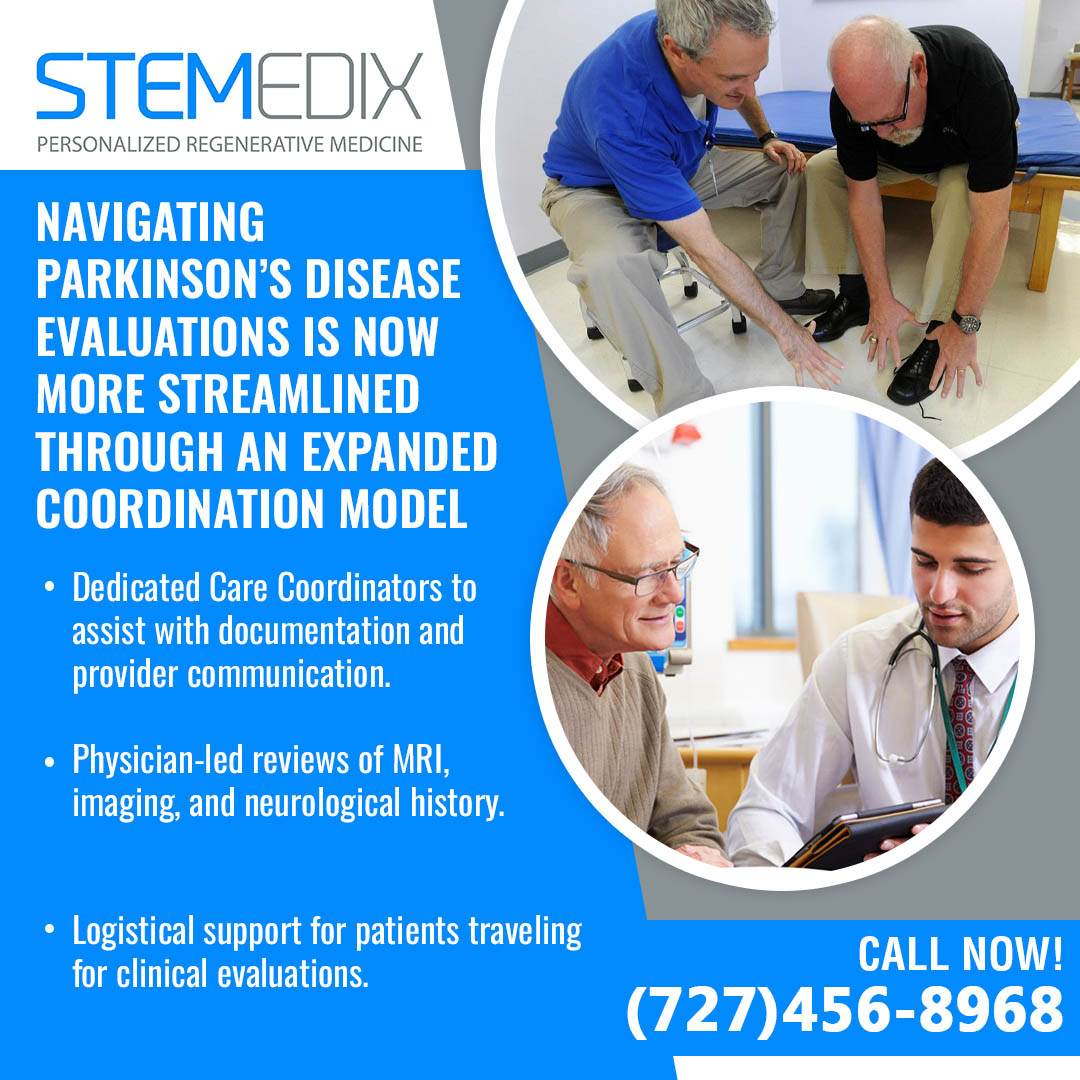
Connect With Stemedix for Care Coordination and Evaluation Support
If you are reviewing Parkinson’s disease symptoms or exploring regenerative therapy for Parkinson’s disease, our team at Stemedix is available to guide you through the next steps with structured record review and physician coordination.
You can contact us at (727) 456-8968 or email yourjourney@stemedix.com to connect with a Care Coordinator. We review your medical history, organize documentation, and help you move through the evaluation process with clear communication.