
For patients with diagnosed joint degeneration who have not yet reached end-stage disease, regenerative therapy may help reduce pain, improve function, and slow tissue breakdown, potentially delaying or reducing the need for surgery. At Stemedix, we review each patient’s existing medical records and diagnosis to determine whether this is a realistic and appropriate path forward.
Why Are More Patients Exploring This Question?
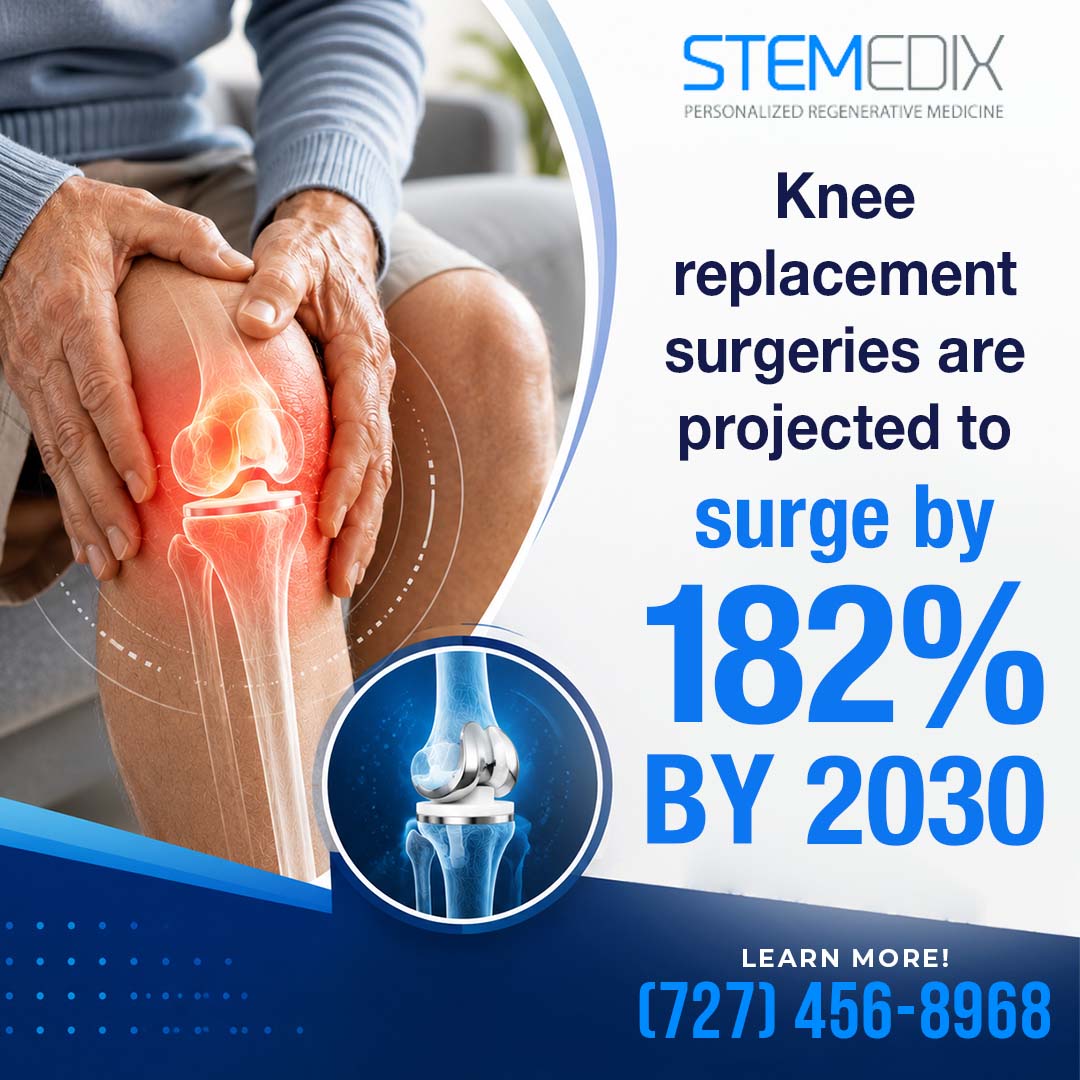
Joint replacement surgery rates are rising significantly across the United States. According to a study published in the Journal of Rheumatology, primary total knee arthroplasty procedures in the U.S. are projected to reach approximately 1.9 million annually by 2030 and exceed 3.4 million by 2040, a 182% and 401% increase respectively compared to 2014 figures.
For many patients, surgery feels like the only option left. For those whose joint degeneration has not reached a severe or end-stage level, it may not be the only path forward.
What Regenerative Therapy Can and Cannot Do?
Being direct about this matters. Regenerative therapy is not a cure. It cannot reverse severe, end-stage joint destruction or structurally rebuild a joint that has completely deteriorated.
For appropriate candidates, it may:
- Reduce chronic inflammation within the affected joint
- Support the biological conditions needed for tissue repair
- Slow the progression of cartilage and tissue breakdown
- Improve daily function and reduce pain levels
- Extend the window before surgical intervention becomes necessary
The phrase “appropriate candidates” is important. Not everyone qualifies. Eligibility is determined through a physician review of your diagnosis and existing medical records.
What the Research Shows
Evidence on regenerative medicine treatment for joint degeneration continues to grow. A comprehensive review published in Military Medicine analyzed multiple systematic reviews and meta-analyses on PRP for knee osteoarthritis and found that significant pain improvement favoring PRP was observed at 12 months or later, with PRP showing greater pain-relieving effects compared to hyaluronic acid at the 12-month mark.
Twelve-month durability matters because one of the most common reasons patients consider surgery is that shorter-term options stop providing adequate relief.
Why Do Some Patients Research Alternatives Before Deciding on Surgery?
Surgery carries its own outcomes that are worth understanding. A 2024 peer-reviewed study published in Bone & Joint Open, reviewing 674 cases of primary total knee arthroplasty, noted that patient dissatisfaction following the procedure has been reported as high as 30%, with unmet expectations identified as a primary contributing factor.
This does not mean surgery is wrong for those who truly need it. For end-stage joint disease, it often remains the most appropriate choice. But for patients at earlier stages of degeneration, understanding whether non-surgical options exist and whether they qualify is a reasonable question to ask.
Who May Be a Candidate?
Patients typically evaluated for regenerative therapy to preserve joint function have:
- Mild to moderate joint degeneration confirmed by existing records
- A diagnosis of osteoarthritis, degenerative joint disease, or a related condition
- Functional limitations or pain that affects daily life
- Interest in a non-surgical path before committing to an invasive procedure
How the Process Works?
At Stemedix, we work from what you already have.
- Share your records — existing scans, MRI reports, and blood work
- Physician review — a board-certified provider evaluates your case
- Candidacy determination — no protocol is recommended without physician confirmation
- Personalized plan — a regenerative medicine treatment protocol built around your specific condition
- Ongoing follow-up — we monitor pain, function, and overall response throughout
For those considering regenerative therapy in Saint Petersburg, FL, we are located within the Bayfront Health Medical Building and offer full ground transportation support.
Frequently Asked Questions
- Is regenerative therapy a guaranteed way to avoid joint replacement surgery?
No. Results vary by patient. For mild to moderate degeneration, it may help delay surgery. Physician evaluation determines whether you are a suitable candidate.
- How do I know if my condition qualifies?
A board-certified physician reviews your existing records, imaging, diagnosis, and health history. We never determine eligibility based on symptoms alone.
- Can I still be evaluated if I have already had one joint replaced?
Yes. We evaluate each case individually. A prior joint procedure does not automatically disqualify you. Your current diagnosis and records guide our assessment.

Speak With a Care Coordinator
If you have been diagnosed with a joint condition and want to understand whether regenerative medicine treatment may be a realistic path before surgery, we are here to help.
Call Stemedix at (727) 456-8968 or email yourjourney@stemedix.com. We serve patients in Saint Petersburg, FL, and surrounding areas.
Related Treatment Pages