
Most people associate Parkinson’s disease with one chemical: dopamine. And while dopamine loss is central to the condition, research shows that this progressive neurological disorder affects multiple neurotransmitter systems throughout the brain. At Stemedix, we work with patients who have already been diagnosed and are seeking a broader understanding of their condition and the options available to them.
This article breaks down what the latest science tells us about the brain chemistry of Parkinson’s and why understanding the full range of Parkinson’s disease symptoms, not just the motor ones, matters for how the condition is managed.
What Is Parkinson’s Disease?
Parkinson’s disease is a progressive neurodegenerative condition that affects the nervous system and the parts of the body it controls. It develops when nerve cells in a region of the brain called the substantia nigra begin to break down. These are the cells responsible for producing dopamine, a chemical messenger that helps coordinate smooth, controlled movement. When these cells are damaged, communication between the brain and body is disrupted.
By the time most people receive a diagnosis, 60% to 80% of dopamine-producing cells have already been damaged.
Core Parkinson’s disease symptoms include:
- Tremors or shaking at rest
- Muscle stiffness or rigidity
- Slowness of movement (bradykinesia)
- Balance and coordination difficulties
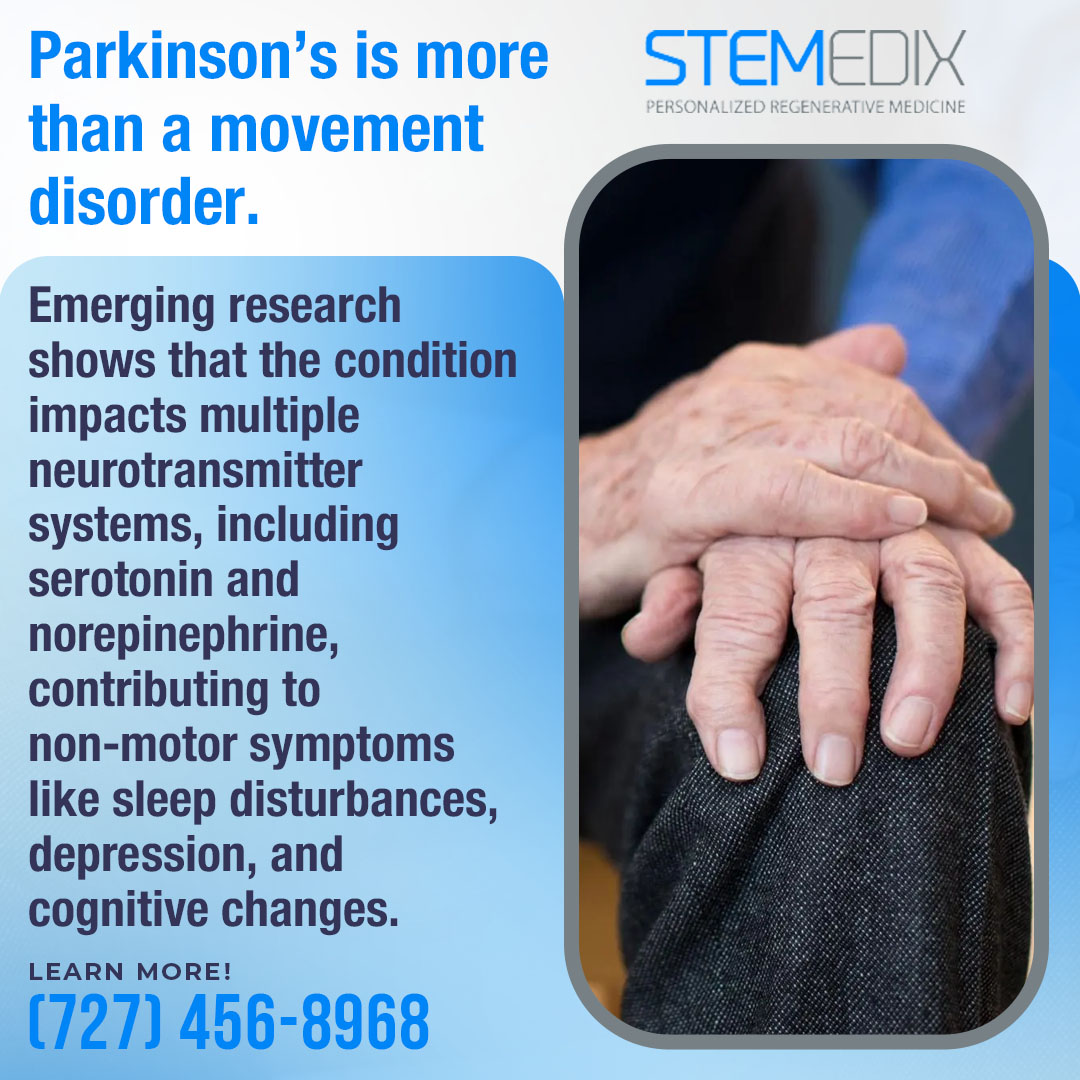
But this condition is far more than a movement disorder.
Why Dopamine Is Not the Whole Story
For decades, research and treatment focused almost entirely on replacing or mimicking dopamine. That approach has helped many patients manage motor difficulties. However, it does not address the full range of what people with this condition experience.
Beyond dopaminergic dysfunction, emerging evidence confirms that other neurotransmitter systems, including noradrenergic, serotonergic, cholinergic, glutamatergic, and GABAergic pathways, are also involved in disease progression and symptom variation.
Through pathology studies, researchers have identified that in advanced stages of the condition, neuronal cells other than dopaminergic cells may preferentially die, causing atypical presentations. These different neurotransmitter deficits lead to a range of non-motor subtypes being observed in patients.
This is why two people with the same diagnosis can have very different experiences.
The Key Neurotransmitters Affected in Parkinson’s Disease
Norepinephrine (Noradrenaline)
Norepinephrine plays a role in regulating mood, alertness, blood pressure, and sleep. In the motor domain, noradrenaline relates to gait control. Non-dopaminergic dysfunction linked to noradrenaline has been connected to motor and non-motor symptoms that are frequently unresponsive to dopamine replacement therapies.
Disruptions in norepinephrine transmission impair descending pain inhibition, intensifying pain signaling and altering the brain’s ability to regulate pain perception. Research suggests that pain in this condition is not merely a consequence of motor dysfunction, but a fundamental component of disease pathology.
Common issues linked to norepinephrine changes include:
- Mood and sleep disturbances
- Memory and thinking difficulties
- Chronic pain unrelated to stiffness or tremor
- Orthostatic hypotension (dizziness when standing)
Serotonin
Serotonin is widely known for its role in mood regulation. In Parkinson’s disease, serotonin loss has significant consequences across both motor and non-motor function.
Depression is a well-documented feature of this condition and is often attributed to serotonin deficiency. It may even precede the appearance of motor difficulties and serve as an early sign. In the motor domain, serotonin relates to resting and postural tremors. The serotonin system is one of the most studied non-dopaminergic neurotransmitter systems, particularly for its role in dyskinesia.
If the serotonergic system is affected, patients may experience sleep attacks, among other non-motor challenges.
Serotonin-related issues commonly observed include:
- Depression and mood changes
- Fatigue
- Sleep disruptions
- Increased tremor severity
Acetylcholine
Acetylcholine (ACh) is involved in learning, memory, attention, and muscle control. When acetylcholine is disrupted, patients may experience changes in thinking, concentration, and memory, as well as uncontrolled movements and excessive saliva production.
The relationship between acetylcholine and dopamine is particularly important. When dopamine levels fall, acetylcholine activity can become imbalanced, which worsens motor symptoms and contributes to cognitive changes.
GABA and Glutamate
GABA (gamma-aminobutyric acid) and glutamate work together to regulate brain activity. GABA slows neural activity; glutamate speeds it up. GABA disruptions are associated with alterations in movement, anxiety, and vision.
Glutamate changes may impact movement, learning, memory, pain, and mood. Researchers are actively studying how targeting these systems could lead to better approaches for managing symptoms that do not respond to dopamine-focused therapies.
The Bigger Picture: Parkinson’s Disease Symptoms Extend Far Beyond Movement
Because this condition affects multiple neurotransmitter systems, it produces a wide range of non-motor issues that are often underrecognized or undertreated.
In a study of over 1,500 patients, 88.5% reported at least one non-motor symptom. Sleep problems and psychiatric symptoms were the most prevalent, followed by fatigue, gastrointestinal issues, urinary symptoms, pain, and cognitive changes.
A systematic review and meta-analysis of 129 studies found that the overall prevalence of depression among people with this condition was 38%, making it one of the most common non-motor features of the disease.
According to a study published in the Journal of Neurology, sleep disorders occur in 74% to 98% of patients with this condition, adversely affecting quality of life, and tend to worsen as the disease progresses.
This data reinforces why care needs to address the full spectrum of what a patient is experiencing, not just tremors and stiffness.
Neurotransmitters and Their Associated Effects
| Neurotransmitter | Key Effects When Disrupted |
| Dopamine | Tremors, rigidity, slowness of movement, balance issues |
| Norepinephrine | Pain, mood changes, sleep issues, low blood pressure |
| Serotonin | Depression, fatigue, sleep attacks, tremor severity |
| Acetylcholine | Cognitive changes, memory issues, uncontrolled movements |
| GABA | Anxiety, movement alterations, vision changes |
| Glutamate | Learning, memory, pain, mood disruptions |
What Does This Mean for Treatment Options?
Understanding the neurochemical complexity of this condition has opened the door to exploring broader therapeutic approaches. Traditional interventions primarily focused on restoring dopamine levels. But because so many other systems are involved, researchers and clinicians are increasingly interested in approaches that address the condition at the cellular level.
Why Researchers Are Exploring Regenerative Therapy
Regenerative therapy for Parkinson’s disease takes a different approach. Rather than simply compensating for lost dopamine, it works by targeting the underlying cellular damage that drives disease progression.
Regenerative cell therapy has provided a platform for evaluating novel methods for treating neurodegenerative conditions. Mesenchymal stromal cells are among the most studied options, as they can differentiate into dopamine-producing neurons and produce neurotrophic substances. They are also considered a promising option due to fewer ethical concerns, a lower risk of immune rejection, and a lower risk of teratogenicity.
A meta-analysis published in Neural Regeneration Research evaluated the therapeutic effects of mesenchymal stromal cells and their derivatives on motor function, memory, and preservation of dopaminergic neurons in animal models.
Beyond dopamine restoration, regenerative biological products also have immune-modulatory and anti-inflammatory properties. This is relevant given that neuroinflammation contributes to the broader neurotransmitter disruptions observed in this condition.
It is important to note that regenerative therapy for Parkinson’s disease is still considered an experimental procedure. Patients are encouraged to research thoroughly and set realistic expectations when exploring this path.
How Stemedix Supports Patients With Parkinson’s Disease
At Stemedix, our team does not diagnose conditions. We work exclusively with patients who have already received a diagnosis and are looking for an alternative path to managing their condition.
Here is how our process works:
- Records review: We work with existing medical history, imaging, blood work, and MRI reports. If records are outdated, our team can assist in gathering updated documentation through a simple medical release form.
- Customized therapy plan: Every patient is different. Our board-certified providers review each case individually and determine whether regenerative therapy is a potential option for that specific situation.
- End-to-end support: A dedicated Care Coordinator guides each patient through every step. For those traveling to our Saint Petersburg, Florida, location, we can assist with ground transportation and accommodation arrangements.
We currently serve patients across Florida, Arizona, and Seattle.
Frequently Asked Questions
Can this condition affect mood and mental health?
Yes. Because Parkinson’s disease disrupts serotonin, norepinephrine, and dopamine pathways, mood changes, depression, and anxiety are common. These are neurological in nature, not simply emotional reactions to a diagnosis.
Why do some symptoms not respond to standard medications?
Many of the motor and non-motor symptoms tied to norepinephrine, serotonin, and acetylcholine do not respond to dopamine-focused treatments. This is because those treatments are not designed to address those systems.
Is This Type of Therapy Right for Everyone?
Not necessarily. Candidacy depends on individual medical history, current health status, and specific condition. A thorough review by a qualified provider is the first step in determining if this option may be appropriate.
What non-motor issues should I discuss with my care team?
Sleep disturbances, depression, anxiety, chronic pain, cognitive changes, and digestive issues are all commonly associated with this condition. Do not assume they are unrelated to your diagnosis.
How Stemedix Can Help You Take the Next Step
Parkinson’s disease is a condition that touches virtually every part of the brain’s communication network. Dopamine loss is the most well-known piece of the puzzle, but it is far from the only one. The neuropathology of this condition shows that complex, interconnected neuronal systems, regulated by multiple neurotransmitters beyond dopamine, are involved in both motor and non-motor presentations.
For anyone living with or supporting a loved one through this diagnosis, understanding the full neurological picture matters. It shapes how symptoms are interpreted, what questions get asked, and what options are worth exploring.
At Stemedix, we believe every patient deserves a thorough, personalized approach to understanding their condition and the options available to them. If you have already received a diagnosis and want to learn more about what regenerative therapy for Parkinson’s disease may offer, our Care Coordinators are here to walk you through the process, answer your questions, and help you determine if this path may be right for your situation.
Reach out to us at (727) 456-8968 or send us an email at yourjourney@stemedix.com to request your personalized information packet and take the first step in your journey with our team.