
Parkinson’s disease affects movement, coordination, and daily function over time, which is why long-term care planning matters. At Stemedix, we work with patients who already have a confirmed diagnosis and are exploring structured regenerative therapy options. You share your medical records with us, and we review them to understand your condition history before any care plan is developed. This process supports clear communication and consistent coordination throughout your journey.
In this article, we explain what regenerative therapy means for Parkinson’s disease, how regenerative medicine treatment is reviewed, and what long-term observations have been documented in patient care planning. We also discuss regenerative therapy in Saint Petersburg, FL, and how we support patients through a structured, physician-guided evaluation process based on submitted medical documentation and individualized review.

Regenerative Therapy for Parkinson’s Disease Overview
Parkinson’s disease affects movement and neurological control over time, and each patient presents a different progression pattern. In this section, you review how regenerative therapy fits into structured care planning for individuals with an existing diagnosis. You also see how medical records guide clinical evaluation before any care plan is developed.
What Regenerative Therapy Means in Parkinson’s Care Planning
Regenerative therapy is a medical approach that supports cellular and tissue function in patients with diagnosed Parkinson’s disease. You look at regenerative therapy as part of a structured care pathway that begins with documented medical history. The focus stays on neurological function support, based on evidence found in patient records rather than assumptions or new testing performed during intake.
Parkinson’s disease is linked to the gradual loss of dopamine-producing neurons in the brain. According to the ScienceDirect source, motor symptoms of Parkinson’s disease typically become evident after about 58% to 64% of dopaminergic neurons have been lost. This loss contributes to changes in coordination, posture, and movement control.
In care planning, you rely on submitted diagnostic information to understand how the condition has progressed. This includes imaging, laboratory reports, and neurological evaluations already completed by the patient’s treating physicians. The role of regenerative therapy in this context is to support structured review of neurological health patterns over time. This step allows you to align the care plan with documented medical history rather than isolated symptoms.
How Regenerative Medicine is Applied in Clinical Evaluation Processes
Regenerative medicine treatment is applied through physician-led review of existing medical records and documented health history. Patients provide verified documentation, and no physical examinations or diagnostic testing are conducted during this stage of review.
Only individuals with confirmed medical conditions are included in the evaluation process. The focus is on structured review of available clinical data to understand disease history, prior treatment background, and current neurological status.
Typical records reviewed include:
- MRI and imaging reports showing structural or neurological findings
- Blood work results reflecting general health indicators
- Neurological evaluations completed by specialists
- Prior diagnostic summaries documenting progression history
Each set of records is reviewed individually. This allows the clinical team to observe documented changes over time and align findings with potential care planning considerations. After physician review, a personalized care plan is developed based on existing medical documentation and confirmed diagnosis.
Long-Term Effects of Regenerative Therapy for Parkinson’s Disease
Long-term observation of Parkinson’s disease focuses on how symptoms change over time and how those changes are recorded in clinical documentation. You rely on consistent tracking of neurological and physical patterns to guide care planning discussions. This section outlines how motor and cognitive functions are reviewed over extended periods using patient records and clinical reports.
Motor Function Patterns Observed Over Extended Care Periods
Parkinson’s disease affects dopamine-producing neurons in the brain, which play a direct role in movement control. As these neurons decline, changes in mobility and coordination are commonly recorded in patient evaluations.
You often see motor-related changes reflected in routine clinical documentation. These records help create a timeline of how movement patterns shift over time. Long-term observations may include:
- Variation in tremor frequency
- Changes in muscle stiffness
- Shifts in walking speed and coordination
Each of these areas is tracked through neurological reports and patient feedback. This type of documentation helps form a structured view of progression patterns across different stages of the condition.
From a care coordination standpoint, you provide updated medical records so clinicians can compare changes over time and adjust planning based on documented progression patterns.
Cognitive and Neurological Changes Documented in Patient Monitoring
Parkinson’s disease extends beyond movement-related symptoms. It can also affect cognitive processes such as memory, attention, and information processing. These changes are typically recorded during neurological evaluations and follow-up assessments.
You may see cognitive trends documented gradually, especially in long-term patient records. These observations help create a broader view of how the condition affects daily functioning beyond physical movement. Monitoring often includes:
- Cognitive performance trends
- Mood and behavioral changes
- Neurological response tracking
Each category is reviewed through structured clinical documentation. This allows care teams to observe changes over time rather than isolated snapshots of patient status.
Research in regenerative medicine continues to examine how biological-based approaches may relate to neurological function patterns in Parkinson’s disease over extended periods. Current published studies remain limited in scale, and reported outcomes vary across participants.
From a patient coordination perspective, you submit updated neurological reports and diagnostic records so clinicians can compare cognitive and behavioral changes across time points. This supports structured planning based on documented history rather than isolated evaluations.
Parkinson’s Disease Progression and Patient Considerations
Parkinson’s disease changes how the brain communicates with the body over time. You often notice shifts in movement, coordination, and daily activity patterns as the condition progresses.
How Parkinson’s Disease Affects Movement and Daily Function Over Time
Parkinson’s disease progression affects movement control due to changes in dopamine-producing neurons in the brain. Dopamine plays a direct role in how signals travel between the brain and muscles. A gradual decline in dopamine-producing neurons leads to slower and less coordinated movement patterns.
According to the Parkinson’s Foundation, nearly 90,000 people in the U.S. are diagnosed with Parkinson’s disease each year, which is 50% higher than the previously estimated 60,000 annual diagnoses.
As dopamine levels decrease, you may see clear functional changes in daily life. These changes often build gradually rather than appearing all at once.
Common progression-related changes include:
- Reduced movement speed
- Increased muscle stiffness
- Reduced coordination during daily activities
These patterns do not follow a single timeline. Each patient’s progression depends on medical history, symptom duration, and overall neurological condition. Some individuals experience slower changes, while others notice faster shifts in mobility and function.
Importance of Long-term Monitoring Using Existing Medical Records
Long-term monitoring relies on existing medical records to track changes in condition status over time. Medical records give a structured view of how Parkinson’s disease has progressed. You provide us with your available documentation, and we use it to review patterns in your neurological and physical health history.
Records used in monitoring include:
- MRI scans
- Laboratory reports
- Specialist evaluations
These records help form a timeline of changes in movement, neurological function, and overall condition status. In some cases, older records do not reflect current health changes. When that happens, updated documentation may be requested to support a more accurate review.
Regenerative Medicine Treatment Process for Parkinson’s Patients
Patients move through a structured review process before any regenerative therapy planning begins. You provide your medical history, and we work through your existing documentation to understand the clinical background of your Parkinson’s diagnosis.
Medical Record Submission and Eligibility Review Requirements
Regenerative medicine treatment begins with submission of existing medical records for physician review. You start by sharing medical documents that reflect your confirmed Parkinson’s diagnosis. This step replaces in-person diagnostic testing and focuses on prior clinical evidence.
We only proceed with patients who already have a documented diagnosis of Parkinson’s disease. This approach aligns with published clinical research protocols that rely on verified baseline diagnoses before reviewing eligibility for investigational therapies.
Required documentation may include:
- Imaging results such as MRI or CT scans
- Blood test panels relevant to neurological health
- Neurology or specialist consultation reports
In many cases, Parkinson’s disease records span several years. If older reports do not reflect current status, updated documentation may be requested. This helps create a clearer clinical timeline and supports more accurate care planning.
Physician-led Evaluation and Individualized Care Planning
Physician-led evaluation determines whether a personalized regenerative therapy plan can be developed. You remain part of a review process that centers on documented medical history rather than direct physical examination. The physician reviews all submitted materials to understand disease progression and current functional status.
The evaluation follows a defined sequence:
- Review of submitted medical records and imaging
- Determination of whether eligibility criteria are met
- Development of a personalized care plan based on clinical history
Each step is completed using documented evidence rather than assumptions or new diagnostic procedures. This approach supports consistency in how patient information is interpreted across different cases.
Care Coordinators work alongside the clinical team by organizing records, requesting missing documentation when needed, and maintaining communication throughout the process. This coordination helps reduce delays in review and keeps documentation structured for physician evaluation.
Stemedix Approach to Regenerative Therapy in Saint Petersburg, FL
At Stemedix, the focus stays on coordinated review of medical records and individualized support across each step of the process. Our approach centers on clear communication between patients, Care Coordinators, and physicians. You provide your existing medical documentation, and we use it to guide the next steps in your regenerative therapy planning in Saint Petersburg, FL.
Care Coordination and Patient Support Services
Stemedix provides structured care coordination and patient support for regenerative therapy in Saint Petersburg, FL. We guide you through each stage of the process so you know what information is needed and how it is used in your care planning. The coordination process is built around your existing medical records and your current condition history.
Support services are designed to assist patients during the care process and may include:
- Medical record collection assistance
- Appointment coordination
- Transportation and mobility support when required
We often work with patients who need help gathering older records. In those cases, you may sign a medical release form so we can request records directly from your prior providers. This helps reduce delays in the review process and keeps your documentation organized in one place.
Care Coordinators remain in contact with you throughout intake and evaluation. You receive guidance on what records are needed and how they support your physician review.
Personalized Regenerative Therapy Planning
Personalized regenerative therapy planning is based on individual medical records and physician review. We do not diagnose conditions. We review documented medical history to guide eligibility and care planning for patients who already have a confirmed diagnosis, including Parkinson’s disease.
Each care plan is developed using:
- Confirmed diagnostic history
- Existing imaging and laboratory data
- Condition-specific medical details
We work with the records you provide, including MRI scans, blood work, and specialist reports. If those records are outdated, updated documentation may be requested before moving forward with evaluation.
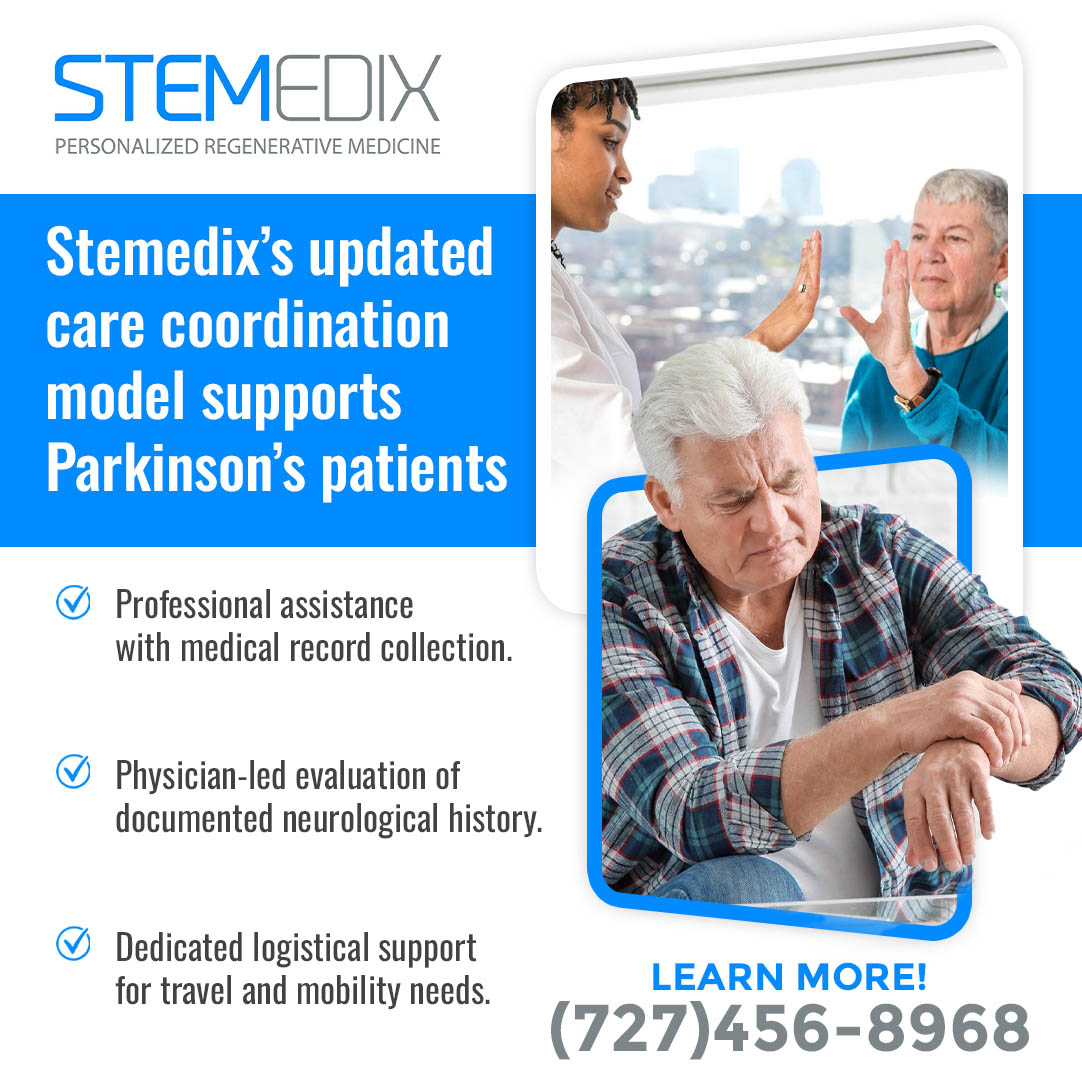
Connect with Stemedix for Regenerative Therapy Support
If you are exploring regenerative therapy for Parkinson’s disease, you can connect with our team at Stemedix to begin a structured review of your existing medical records. We guide you through each step of the process, explain what documentation is needed, and support you as your case is prepared for physician evaluation in regenerative therapy in Saint Petersburg, FL. Contact us at (727) 456-8968 or email yourjourney@stemedix.com to speak with a Care Coordinator. We will help organize your records, answer your questions, and coordinate the next steps so your information can be reviewed for eligibility and individualized care planning.
Regulatory Notice: Regenerative medicine treatments for Parkinson’s disease are considered investigational and are not FDA-approved. Stemedix makes no claims regarding cure, diagnosis, or prevention of any disease. The efficacy of regenerative therapy has not been confirmed by the FDA, and outcomes vary by individual. Patient testimonials and research references should not be viewed as guarantees of results. This information does not replace professional medical advice from your treating physician.
Related Treatment Pages