Literature Review: Do Mesenchymal Stem Cells Suppress Systemic Cytokines in Lupus and COPD?
A peer-reviewed review of studies examining mesenchymal stem cells, systemic cytokines, lupus, and COPD.

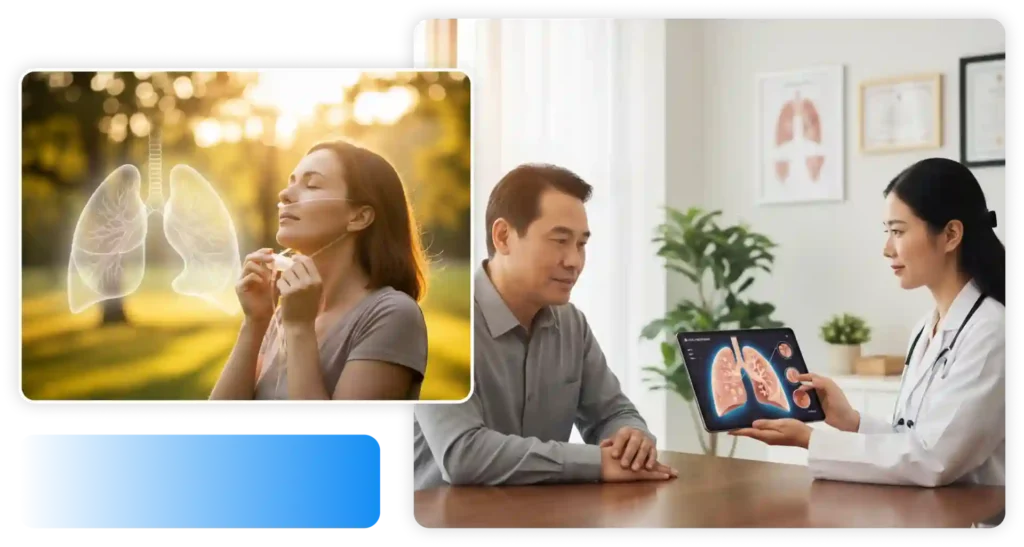
Regenerative Medicine for COPD can be an excellent natural alternative option for individuals who seek to manage their symptoms and slow down the progression of this debilitating condition. Through the use of regenerative techniques, individuals can potentially enhance their body’s ability to heal and regenerate damaged tissues, thereby offering a promising avenue for the management of COPD.
Discover our wide range of treatments by calling us at (800) 531-0831

Content Review: Michael Healey, M.Ed., C.A.S.
Last Updated: September 2026
Chronic obstructive pulmonary disease, or COPD, is a long-term lung condition that makes it harder to move air in and out of the lungs. It includes emphysema and chronic bronchitis. COPD can cause shortness of breath, cough, mucus production, fatigue, reduced activity tolerance, and flare-ups called exacerbations. Symptoms and severity vary, and a pulmonary clinician can help confirm the diagnosis and develop an individualized care plan.
Common symptoms include:
Smoking is the most common cause of COPD. Long-term exposure to workplace dust, fumes, air pollution, or secondhand smoke may also contribute. A rare inherited condition called alpha-1 antitrypsin deficiency can increase risk.

COPD exacerbations can become serious quickly. Seek emergency care for severe shortness of breath at rest, difficulty speaking in full sentences, chest pain, confusion or unusual drowsiness, or a bluish color in the lips or fingertips. Contact your clinician promptly if your usual symptoms worsen, your rescue inhaler is less effective than normal, or you develop a fever.
There is no cure for COPD, but established treatment can reduce symptoms, lower the risk of exacerbations, and support daily function and quality of life.
Standard Treatment Categories
Stem cell therapy for COPD is an area of emerging research. Scientists are studying several cell-based approaches, including mesenchymal stromal cells, or MSCs, and lung-progenitor-cell therapies.
What Researchers Are Studying
MSC and lung-progenitor-cell therapies are distinct products with different sources, delivery methods, biological goals, and risks. Researchers are evaluating each approach separately.
Note: Stem cell therapies for COPD are not FDA-approved and are investigational. Research findings do not guarantee individual results.
How Stem Cell Therapy for COPD Is Being Studied
MSC studies examine safety, feasibility, inflammatory markers, lung-function tests, six-minute walk distance, and patient-reported outcomes. Lung-progenitor-cell studies are investigating a different strategy: whether cells obtained from a person’s own airway can be expanded and reintroduced as part of a specialized clinical protocol. Researchers are studying different cell products, patient populations, delivery methods, and outcomes to help guide continued research on stem cell treatment for COPD and regenerative medicine for COPD.
2024: Autologous P63+ Lung Progenitor Cells Reported Favorable Safety and Functional Findings
Autologous Transplantation of P63+ Lung Progenitor Cells for Chronic Obstructive Pulmonary Disease Therapy — Read Study
This early clinical study evaluated autologous P63+ lung progenitor cells in people with COPD. Twenty participants were evaluated, including 17 who received the cell procedure and three who received standard care alone. The authors reported changes in lung-function, gas-exchange, imaging, and exercise measures during 24 weeks of follow-up, with no treatment-related serious adverse events reported. These findings add to clinical research on autologous lung-progenitor-cell therapy for COPD.
2020: Umbilical Cord-Derived MSC Pilot Study Reported Favorable Safety Findings
Allogeneic Umbilical Cord-Derived Mesenchymal Stem Cell Transplantation for Treating Chronic Obstructive Pulmonary Disease: A Pilot Clinical Study — Read Study
This pilot study enrolled 20 people with moderate-to-severe COPD who received an intravenous infusion of allogeneic umbilical-cord-derived MSCs. The authors reported no infusion-related toxicities, deaths, or treatment-related severe adverse events during six months of follow-up. Some symptom and quality-of-life measures improved among participants with more advanced disease. These findings contribute early clinical information on intravenous UC-MSC treatment for COPD.
2013: Allogeneic Bone Marrow-Derived MSC Trial Reported Reduced Inflammatory Markers
A Placebo-Controlled, Randomized Trial of Mesenchymal Stem Cells in COPD — Read Study
This randomized, placebo-controlled trial enrolled 62 people with moderate-to-severe COPD who received four monthly infusions of an allogeneic bone-marrow-derived MSC product or placebo, with follow-up over two years. The investigators evaluated lung function, quality of life, exacerbations, inflammatory markers, and other clinical outcomes. C-reactive protein declined in the MSC group among participants with elevated baseline levels. A later analysis also reported functional improvements among participants with the highest baseline C-reactive protein. These findings add to ongoing research on MSC-based approaches for COPD.
For people with COPD, stem cell therapy for COPD and other regenerative medicine approaches may be topics to discuss after a pulmonary evaluation and review of established treatment options. A consultation can help you understand the specific product and delivery method being considered, the human research supporting that exact approach, and questions to discuss with your treating pulmonary clinician. Continue prescribed COPD treatment unless your clinician recommends a change.
At Stemedix, our focus is education, safety, and scientific transparency. We help patients understand how regenerative medicine research might fit into a personalized plan for lung health and quality of life.
This page is for educational purposes only and does not constitute medical advice.
Stem cell and regenerative medicine therapies for COPD are investigational and are not FDA-approved for this use. Research findings do not guarantee individual results.
Always consult a qualified healthcare professional before making treatment decisions.
U.S. Food and Drug Administration. Important Patient and Consumer Information About Regenerative Medicine Therapies. FDA
Speak with a Care Coordinator today for a more accurate assessment of your condition and therapy options.
Catherine shares her incredible journey of 20 years with Rheumatoid Arthritis how Regenerative Medicine has given her the opportunity to be able to enjoy more of her passion of painting.

Our Board-Certified Physicians specialize in regenerative medicine. They stay abreast of the latest developments in stem cell research. Each patient is screened and reviewed before being approved for therapy.

Each patient is thoroughly reviewed to ensure their safety for treatment. The physicians will then determine potential benefit candidacy. If approved, a customized treatment plan is offered for the patient.

Stemedix can help coordinate patients with necessary wheelchair transportation, medical equipment, and Care Giving services as needed during their stay. Your Care Coordinator is available for questions and assistance.

A peer-reviewed review of studies examining mesenchymal stem cells, systemic cytokines, lupus, and COPD.

Stem cells have shown promise for treating a number of autoimmune diseases, where the immune system attacks the body. Lupus causes chronic inflammation as a result of immune system attack of the body’s tissues and organs and so is a reasonable candidate for stem cell therapy. The cells of the immune system that tend to…
Systemic lupus erythematosus or simply “lupus” is a chronic inflammatory disease that can affect almost every organ and tissue in the body. Most people are aware of chronic fatigue, muscle and joint pain, and a characteristic facial skin rash that occurs in people with lupus. However, the disease can affect the gastrointestinal tract, lungs, heart,…
Contact us today and let Stemedix provide a professional service accompanied by one of our Care Coordinators to ensure you have the best experience possible!