
Direct answer: Bring diagnosis documentation, relevant imaging and laboratory results, a current medication and supplement list, notes about prior treatments, and your goals and questions. If records are missing or outdated, bring what you have and ask the Care Coordinator what the clinical review may require next.
Why do your medical records matter?
Records help the clinical team understand the history behind a diagnosis, changes in symptoms, and care you have already tried. Stemedix’s process generally begins with a Care Coordinator and review of an existing diagnosis, records, imaging or laboratory findings, medications, and medical history.[1]
Providing records does not establish treatment eligibility or predict an outcome. Recommendations, if any, depend on an individualized clinical review.
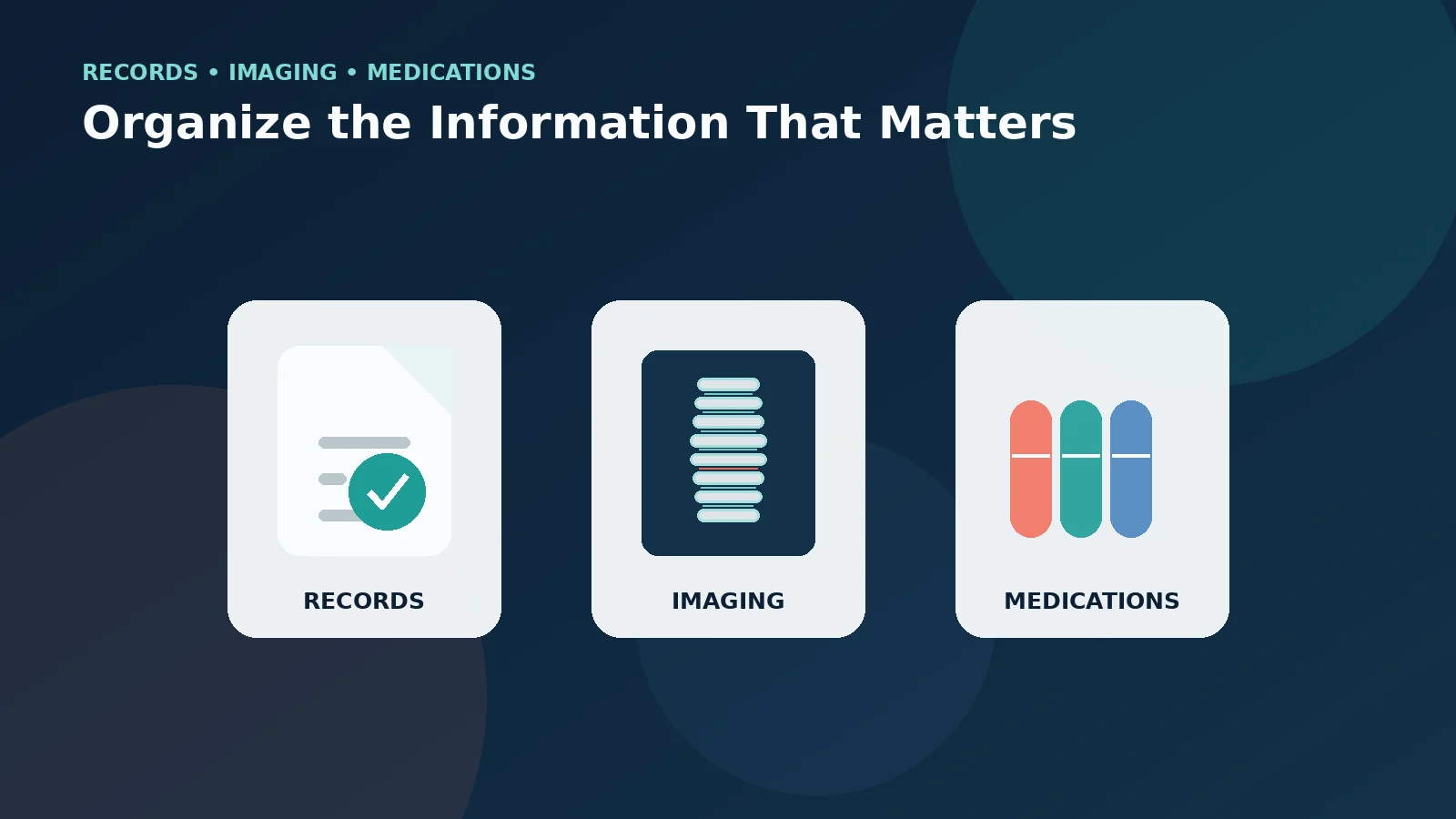
What should you bring or send?
Start with information related to the condition you want to discuss. This checklist can help:
| Item | Useful details |
|---|---|
| Diagnosis documentation | Relevant specialist notes, hospital summaries, and records showing who made or confirmed the diagnosis |
| Imaging | Relevant MRI, CT, X-ray, ultrasound, or other studies; include reports and, when available, access to the image files |
| Laboratory or test results | Recent and important prior bloodwork, pathology, pulmonary or cardiac testing, or other condition-specific results |
| Medication and supplement list | Name, dose, frequency, reason for use, plus known medication allergies or reactions |
| Prior treatments | Medications, injections, procedures, surgery, therapy, or rehabilitation; add approximate dates, response, and side effects |
| Symptom timeline | When symptoms began, major changes, current limitations, and any recent change in your overall health |
The FDA recommends maintaining an updated list of prescription medicines, over-the-counter products, vitamins, supplements, allergies, and adverse reactions.[4] Do not stop or change a medication for the consultation unless the prescribing clinician tells you to.
For imaging, the report contains the radiologist’s interpretation, while the files allow an authorized clinician to review the study directly. RadiologyInfo.org advises patients to ask how their images can be accessed and shared.[5]
What goals and questions should you prepare?
Write down what you hope to understand and what matters in daily life. A specific goal such as “walk farther with fewer rest breaks” gives more context than “feel better.”
Consider asking:
- What can be determined from my current records?
- Are newer records or tests needed before review can continue?
- What are the potential risks, uncertainties, and alternatives?
- What does current evidence show—and not show—for my diagnosis?
- Could follow-up with one of my current physicians be appropriate?
The National Institute on Aging recommends preparing questions and sharing the main concerns early in a medical appointment.[6]
How should you handle privacy and record transfers?
Ask the Care Coordinator which records are relevant and which secure transfer methods are available. Options may include a patient portal, electronic copies, imaging on digital media, or authorization for one provider to send records to another.
Under the HIPAA Privacy Rule, individuals generally have a legal right to inspect and receive copies of information in their medical and other health records from covered providers and health plans.[3] Request records early, because processing times vary, and confirm receipt. Follow the Care Coordinator’s transfer instructions rather than sending sensitive information through an unapproved channel.
What if your records are outdated or incomplete?
Older records may still provide useful history. Bring what you have, clearly note each item’s date, and describe important changes since it was completed. Do not arrange repeat imaging or laboratory testing on your own solely for the consultation.
The Care Coordinator can identify apparent gaps. After review, the medical team may request newer information or clarification from a current treating clinician. That depends on the diagnosis, symptoms, health changes, medications, and available records; a request for more information is not confirmation of candidacy.
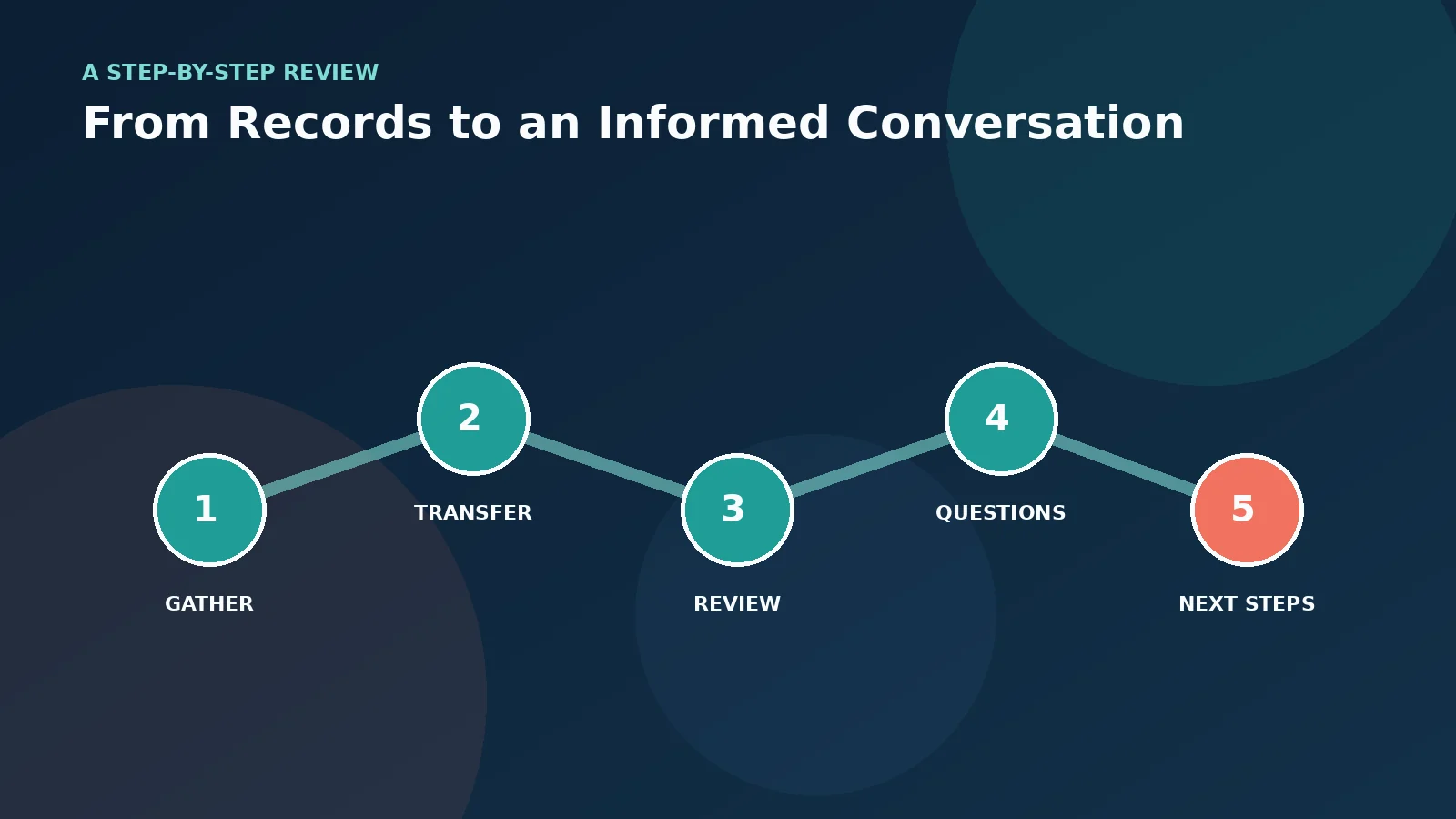
What happens during the first conversation?
Be prepared to summarize your diagnosis, current symptoms, medical history, prior care, medications, and goals. Stemedix may request additional information after reviewing what is available.[1][2] A records review is one step in deciding whether further evaluation is appropriate—not a guarantee that a regenerative medicine option will be recommended.
Frequently Asked Questions
Do I need every medical record I have ever received?
Focus first on material related to your diagnosis, present health, medications, and prior treatments. Ask the Care Coordinator before sending a large, unorganized record set.
Should I provide both an imaging report and the actual images?
If available, provide or arrange access to both. The report gives the radiologist’s interpretation; the files permit direct review of the study.
Can I contact Stemedix if some records are missing?
Yes. Explain what is available to a Care Coordinator. The team can describe the review process and information that may be requested, but the conversation does not determine eligibility.
Start With a Care Coordinator
Contact a Stemedix Care Coordinator to learn how to submit available records and what the next step may involve. No treatment eligibility or outcome can be determined from a checklist alone. Call 800-531-0831 or visit the Stemedix regenerative medicine page (https://stemedix.com/regenerative-medicine/) to get started.
Sources
[1] https://stemedix.com/regenerative-medicine — Regenerative Medicine – Stemedix
[2] https://stemedix.com/medical-history — Medical History – Stemedix
[3] https://www.hhs.gov/hipaa/for-individuals/medical-records/index.html — Your Medical Records – HHS
[4] https://www.fda.gov/consumers/consumer-updates/create-and-keep-medication-list-your-health — Create and Keep a Medication List for Your Health – FDA
[5] https://www.radiologyinfo.org/en/info/article-your-medical-images — How to Obtain and Share Your Medical Images – RadiologyInfo.org
[6] https://www.nia.nih.gov/health/medical-care-and-appointments/how-prepare-doctors-appointment — How To Prepare for a Doctor's Appointment – National Institute on Aging
Related Treatment Pages