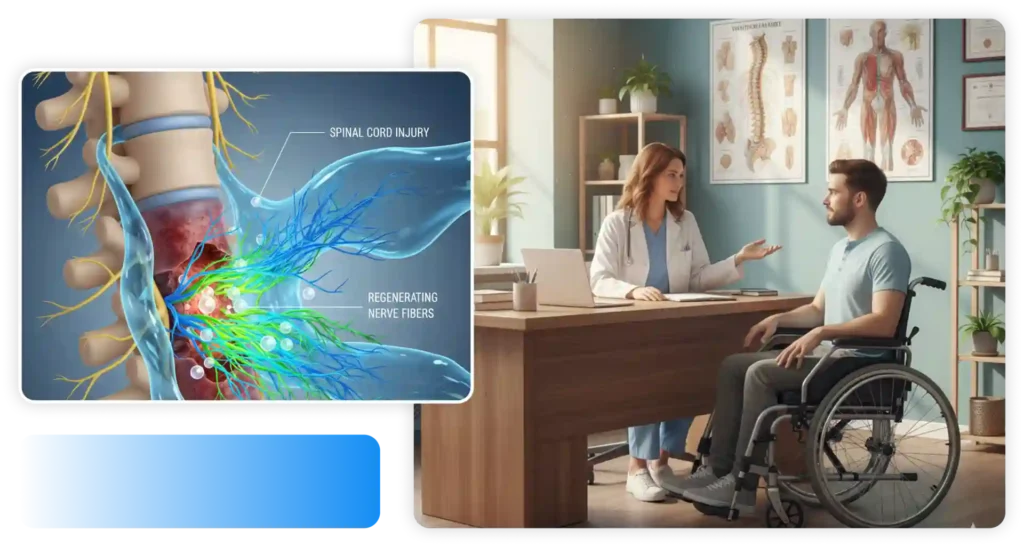
A spinal cord injury (SCI) occurs when damage to the spinal cord disrupts its function, potentially leading to loss of muscle function, senses, and autonomic functions throughout the body. Typically, SCI results from serious accidents or violent events. This type of injury usually has a lasting effect on an individual’s daily life. Roughly 12,500 spinal cord injuries occur in the U.S. each year.
The spinal cord consists of a bundle of nerves that run down the back. These nerves are responsible for carrying signals between the body and the brain, so when the spinal cord becomes damaged, it results in the disruption of this critical transfer of signals. Usually, the spinal cord becomes damaged as a result of a fracture or dislocation of the vertebrae or bone disks.
Due to the complex nature of the spine, various types of SCI can result in different symptoms. There are two main types of SCI: complete, in which the spinal cord is fully damaged and total loss of function occurs; and, incomplete, in which the spinal cord is only partially damaged. SCIs are further classified by the region of the spine in which they occur, which corresponds with various body parts and systems:
In addition to these symptoms, SCI patients may experience headaches, chronic muscle and nerve pain, loss of sexual function, and low libido, among others. While there is currently no treatment method available to fully reverse spinal cord damage, all techniques are focused on preventing further injury and improving quality of life. Rehabilitation, surgery, and medications may be used, depending on the nature of the injury and its symptoms.