Multiple Sclerosis

Regenerative Medicine For Multiple Sclerosis | Stemedix

Regenerative Medicine for Multiple Sclerosis

Discover how Regenerative Medicine is studied as a potential option for those seeking to manage their symptoms.

Contact a Care Coordinator
SCHEDULE A CONSULTATION

Discover our wide range of treatments by calling us at (800) 531-0831

Content Review: Michael Healey, M.Ed., C.A.S. Last Updated: September 2026

What Is Multiple Sclerosis?

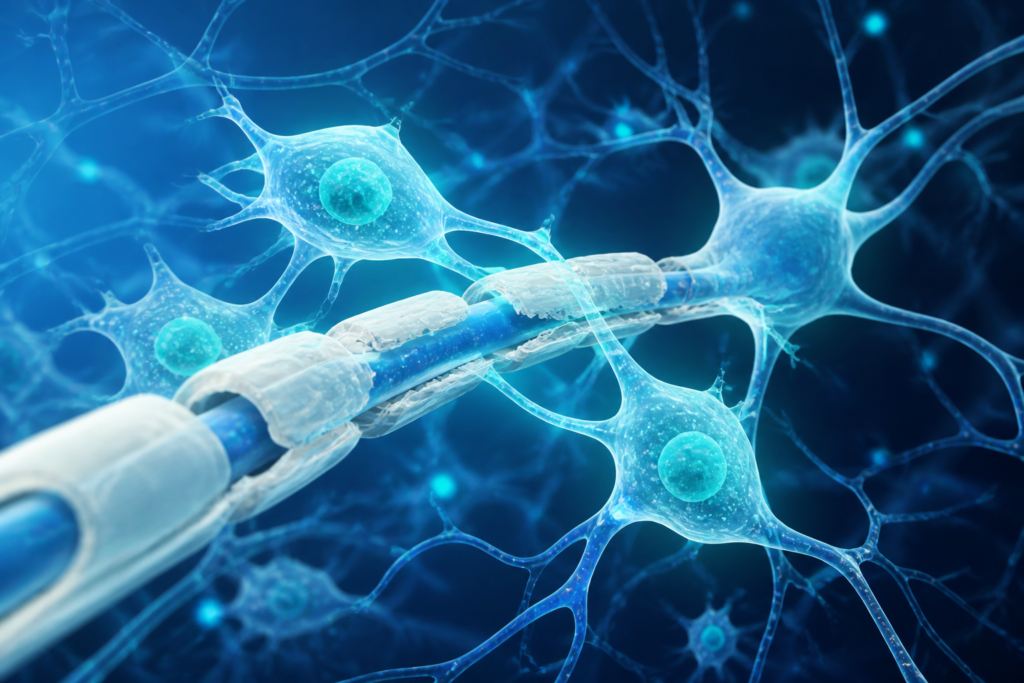
Multiple sclerosis, or MS, is an immune-mediated disease of the central nervous system, including the brain, spinal cord, and optic nerves. In MS, immune activity damages myelin, the protective covering around nerve fibers, and may also damage nerve cells. MS can affect vision, sensation, mobility, coordination, fatigue, thinking, and bladder or bowel function. Symptoms, disease activity, and treatment needs differ from person to person. A neurologist, ideally one with experience treating MS, can help confirm the diagnosis and guide ongoing care.

Common Symptoms

  • Numbness, tingling, weakness, or muscle stiffness
  • Problems with balance, coordination, or walking
  • Vision changes, including blurred or double vision
  • Fatigue that is not fully relieved by rest
  • Pain, dizziness, or changes in sensation
  • Cognitive changes involving memory, focus, or processing speed
  • Bladder or bowel symptoms

Current Medical Treatments

There is no cure for MS, but established treatment can reduce disease activity, manage relapses and symptoms, and support function and quality of life. Disease-modifying therapy decisions should be made with a treating neurologist.

Standard Treatment Categories

  • Disease-modifying therapies: These medicines can reduce relapses and new inflammatory activity for many people with relapsing forms of MS.
  • Relapse treatment: Corticosteroids and other treatments may be used for clinically significant relapses.
  • Symptom management: Individualized treatment may address pain, spasticity, fatigue, sleep, mood, bladder symptoms, or bowel symptoms.
  • Physical, occupational, and speech therapy: Rehabilitation can support mobility, safety, daily function, communication, and swallowing.
  • Exercise and supportive care: Appropriately tailored activity, sleep, mental-health support, and management of other health conditions are important parts of comprehensive care.

Stem Cell Therapy and Regenerative Medicine Research for MS

Stem cell therapy for multiple sclerosis is an area of emerging research. Scientists are studying several distinct approaches, including autologous hematopoietic stem cell transplantation and mesenchymal stromal cell, or MSC, therapies.

What Researchers Are Studying

  • Reset immune activity through intensive, medically supervised transplantation in selected circumstances
  • Influence inflammatory and immune-system signaling
  • Be delivered safely and feasibly in carefully selected people with MS
  • Be further evaluated for their effects on relapse activity, MRI findings, neurological function, and quality of life

Autologous hematopoietic stem cell transplantation is a highly specialized procedure that uses a person’s own blood-forming stem cells after intensive treatment. MSC research evaluates a different strategy, including intravenous or intrathecal delivery. These approaches are not interchangeable.

Note: Stem cell therapies for multiple sclerosis are investigational and are not FDA-approved. Research findings do not guarantee individual results.

How Stem Cell Therapy for MS Is Being Studied

MSC studies examine safety, feasibility, immune markers, MRI findings, and changes in disability or symptom measures. Researchers are evaluating different cell sources, doses, delivery routes, and treatment schedules. This work is helping identify the approaches and patient groups that warrant continued clinical study. Stem cell treatment for MS remains investigational.

Recent Clinical Studies in Regenerative MS Research

2024: Umbilical Cord MSC Dose-Finding Study Reported Safety and Clinical Findings

Human Umbilical Cord-Derived Mesenchymal Stem Cells in the Treatment of Multiple Sclerosis Patients: Phase I/II Dose-Finding Clinical StudyRead Study

This phase I/II study enrolled 35 people with MS, including 20 in Group A and 15 in Group B. Two participants withdrew, leaving 33 in the efficacy analysis. Each 150-million-cell dose was divided between intravenous delivery of 50 million cells and intrathecal delivery of 100 million cells. Group A received two combined intravenous and intrathecal doses, while Group B received one dose, and both groups also received conditioned medium three months later. The investigators reported no serious adverse events and described changes in disability scores, MRI measures, hand dexterity, and processing-speed measures. These findings add to clinical research on combined intravenous and intrathecal UC-MSC treatment for MS.

2020: Long-Term Follow-Up Reported Safety Observations After Combined IV and Intrathecal MSC Treatment

IV/IT hUC-MSCs Infusion in RRMS and NMO: A 10-Year Follow-Up StudyRead Study

This follow-up study included 10 women, including five with relapsing-remitting MS and five with neuromyelitis optica. Participants received four intravenous and three intrathecal umbilical-cord-derived MSC administrations over 21 days. The authors reported no treatment-related tumor formation or major organ complications during follow-up. These findings contribute long-term clinical information on combined intravenous and intrathecal UC-MSC administration in a small group of people with relapsing-remitting MS and neuromyelitis optica.

2018: Intravenous Umbilical Cord MSC Study Reported Safety and Functional Findings

Clinical Feasibility of Umbilical Cord Tissue-Derived Mesenchymal Stem Cells in the Treatment of Multiple SclerosisRead Study

This open-label study enrolled 20 people with MS who received seven intravenous umbilical-cord-MSC infusions over seven days. The authors reported no serious adverse events; headache and fatigue were among the most commonly reported possibly treatment-related events. The study also reported improvements from baseline in selected disability, hand-function, walking, bladder and bowel, and quality-of-life measures. These findings add early clinical information on intravenous UC-MSC treatment for MS.


Could Stem Cell Therapy for Multiple Sclerosis Be Right for You?

For people with MS, stem cell therapy for multiple sclerosis and other regenerative medicine approaches may be topics to discuss after a thorough neurological evaluation and review of established treatment options. A consultation can help you understand the specific product and delivery method being considered, the human research supporting that exact approach, and questions to discuss with your treating neurologist.

At Stemedix, we take a patient-centered approach to regenerative medicine, informed by emerging clinical research. Our team reviews your medical history, current treatment plan, and goals to help determine whether an investigational regenerative approach may be appropriate to explore.

Medical Disclaimer

This page is for educational purposes only and does not constitute medical advice.
Stem cell and regenerative medicine therapies for multiple sclerosis are investigational and are not FDA-approved for this use. Research findings do not guarantee individual results.
Always consult a qualified healthcare professional before making treatment decisions.

References

  1. Jamali F. et al. Human Umbilical Cord-Derived Mesenchymal Stem Cells in the Treatment of Multiple Sclerosis Patients. Cell Transplantation., 2024. PubMed
  2. Lu Z. et al. IV/IT hUC-MSCs Infusion in RRMS and NMO: A 10-Year Follow-Up Study. Frontiers in Neurology., 2020. Full Text
  3. Riordan NH. et al. Clinical Feasibility of Umbilical Cord Tissue-Derived Mesenchymal Stem Cells in the Treatment of Multiple Sclerosis. Journal of Translational Medicine., 2018. Full Text

U.S. Food and Drug Administration. Important Patient and Consumer Information About Regenerative Medicine Therapies. FDA

Speak with a Care Coordinator today for a more accurate assessment of your condition and therapy options.

Speak with a Care Coordinator

Patient Testimonial

Stemedix speaks with Thomas R. and his wife about their experience with Stemedix and his regenerative medicine therapy for Multiple Sclerosis. Thomas has Relapsing Remitting Multiple Sclerosis (RRMS).

How Stemedix Helps You Heal

Professional Medical Care

Heal Box | Stemedix
Heal Box | Stemedix

Our Board-Certified Physicians specialize in regenerative medicine. They stay abreast of the latest developments in regenerative medicine research. Each patient is screened and reviewed before being approved for therapy.

Advanced Therapy

Advanced Therapy Multiple Sclerosis | Stemedix

Each patient is thoroughly reviewed to ensure their safety for treatment. The physicians will then determine potential benefit candidacy. If approved, a customized treatment plan is offered for the patient.

Specialized Care

Specialized Care Multiple Sclerosis | Stemedix

Stemedix can help coordinate patients with necessary wheelchair transportation, medical equipment, and Care Giving services as needed during their stay. Your Care Coordinator is available for questions and assistance.

Latest Articles on Regenerative Medicine Therapy for Multiple Sclerosis & Health Awareness

What Is Regenerative Medicine for Multiple Sclerosis?

Multiple sclerosis (MS) is a condition that affects the central nervous system, disrupting the ways in which information flows within and to and from the brain. Its cause is unknown, though experts believe it may result from a combination of genetic and environmental factors. The trajectory and symptoms of the disease are often unpredictable. People…

Regenerative Medicine More Effective Than Disease-Modifying Therapy for Patients with Relapsing-Remitting Multiple Sclerosis

The most common form of multiple sclerosis is a relapsing-remitting MS. In relapsing-remitting multiple sclerosis, patients have relatively quiet, healthy times interrupted by disease flares. MS flares can cause many different neurological symptoms. The disease can interfere with any number of bodily processes, from walking to seeing, to urinating. For many years, the only treatments…

Can Stem Cells Treat Neural Damage Caused by Multiple Sclerosis?

Multiple sclerosis (MS) is a chronic illness that damages nerves in the brain and spinal cord. In this disease, the body’s immune system mistakenly targets and attacks the myelin in the central nervous system, or the layer of insulation around the nerves. As the autoantibodies target healthy myelin tissue, neurological disabilities ensue. While there is…

Read all blogs
Subscribe To Our Newsletter

Join our mailing list to receive the latest news and updates from our team.

"*" indicates required fields

This field is for validation purposes and should be left unchanged.
Quick Summary

Stem Cell Therapy for Multiple Sclerosis — At a Glance