
Non-opioid pain management includes physical therapy, interventional treatments, and regenerative medicine, all recommended by the CDC as first-line approaches for chronic pain relief. These options address pain through movement, nerve modulation, and tissue support instead of relying on opioid medication. Chronic pain now affects millions of adults nationwide, making non-opioid pain management an increasingly common conversation between patients and providers. We at Stemedix focus on personalized, non-opioid pain management plans built around each patient’s existing diagnosis and medical history.
How Common Is Chronic Pain Today?
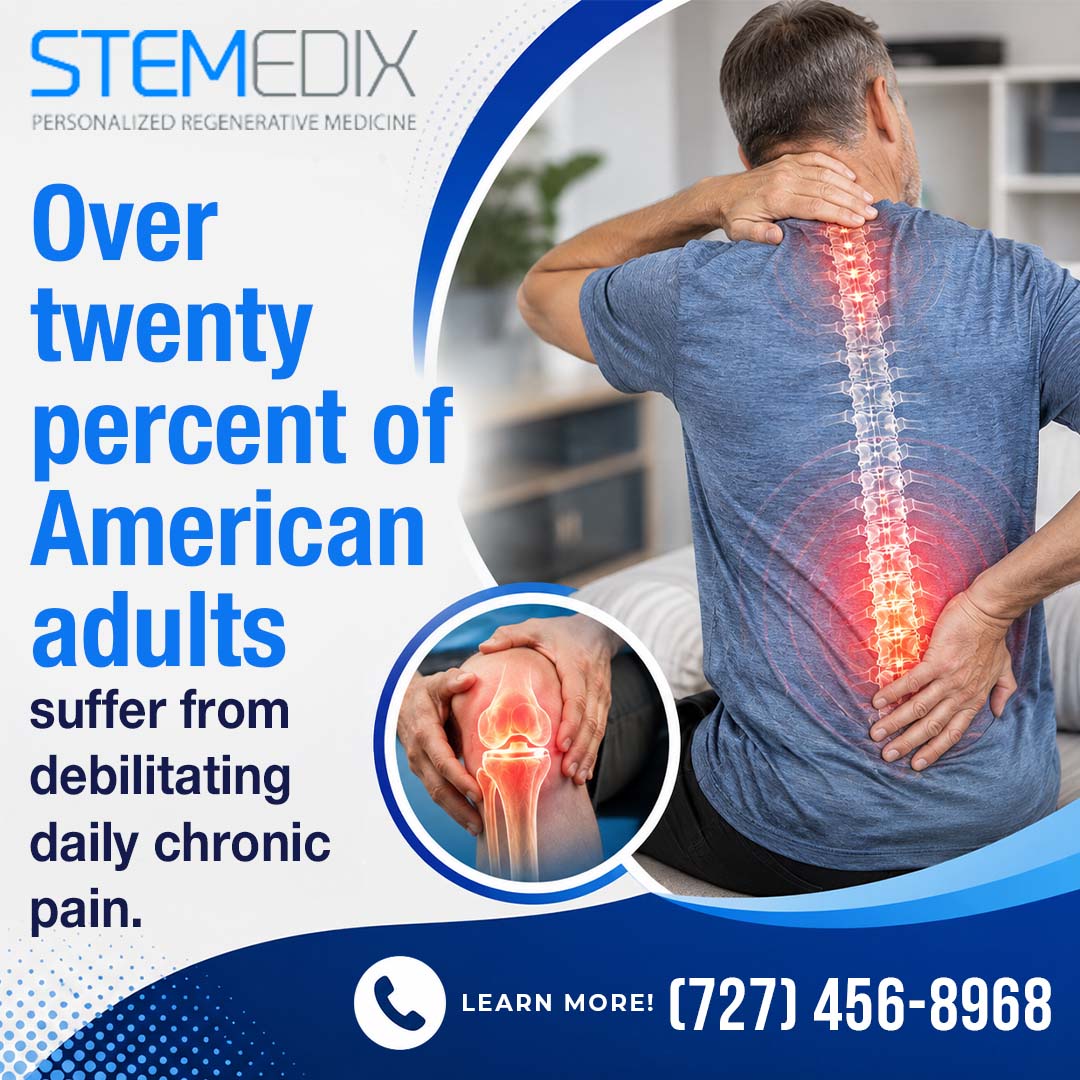
Chronic pain has become one of the most widespread health concerns in the country. According to the CDC’s National Center for Health Statistics, 24.3% of U.S. adults experienced chronic pain in 2023, and 8.5% had high-impact chronic pain that limited their daily activities. Women were slightly more likely to report chronic pain than men, and prevalence increased steadily with age. This scale is part of why non-opioid pain management has moved to the center of many care conversations, rather than staying a secondary option.
Why Are Non-Opioid Approaches Recommended First?
Chronic pain is a widespread issue beyond national statistics as well. Research published through the National Institutes of Health found 52.4 new cases of chronic pain per 1,000 people each year, a rate higher than several other common health conditions, including diabetes and depression. This has led national guidelines to favor non-opioid approaches for ongoing pain, since they can offer meaningful, lasting relief without the risks tied to long-term opioid use, such as dependency or tolerance buildup.
What Non-Opioid Options Exist for Chronic Pain?
Pain management today draws from several non-opioid categories, often combined rather than used alone:
- Physical therapy and structured exercise programs
- NSAIDs or topical medications for localized relief
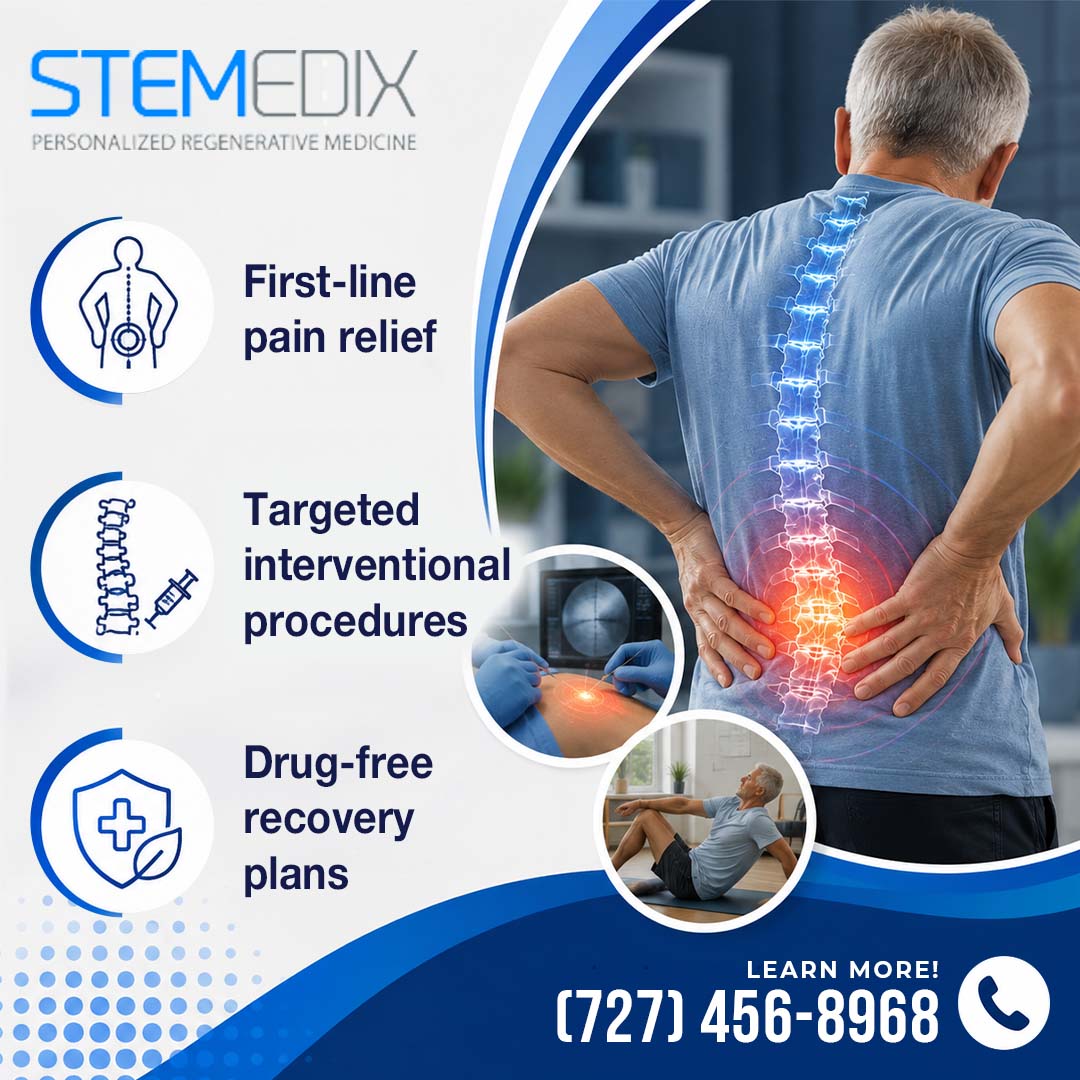
- Interventional procedures, such as trigger point injections or nerve blocks
- Mind-body approaches, including cognitive behavioral therapy
- Regenerative pain management, using biologic and cell-based therapies
Each category targets pain through a different mechanism, so the right combination depends on a person’s specific diagnosis, history, and daily routine.
What Does Personalized Pain Management Look Like at Stemedix?
At Stemedix, our approach centers on regenerative pain management paired with interventional techniques. We do not diagnose conditions or perform imaging. Instead, our team reviews a patient’s existing diagnosis, bloodwork, and imaging, then a board-certified provider designs a plan around that information. If records are outdated, our care coordinators can help gather updated versions before treatment planning begins, so patients are not left navigating paperwork alone.
People exploring pain management in Saint Petersburg, FL, are often managing joint pain, disc-related pain, or nerve pain that has lasted for months or longer. Anyone considering a new pain management plan should still speak with their current physician first, since changes to existing care always need medical oversight and coordination.
Frequently Asked Questions
How long before non-opioid pain management shows results?
Timelines vary by condition, treatment type, and how long the pain has been present. A provider can offer a general expectation after reviewing a patient’s records.
Does Stemedix replace a patient’s primary doctor?
No. Stemedix builds treatment plans based on an existing diagnosis and works alongside a patient’s current care team, not in place of it.
Does insurance cover non-opioid pain management?
Coverage depends on the specific treatment and insurance plan. Our office can review coverage questions by phone.
Ready to Learn More?
If chronic pain has become part of daily life, personalized pain management in Saint Petersburg, FL, may be worth discussing with your care team. Contact Stemedix at (727) 456-8968 or email yourjourney@stemedix.com to learn more about our approach to non-opioid, regenerative pain management.
Related Treatment Pages