Regenerative Therapies for Lumbar Degenerative Disc Disease
A review of cell therapies, PRP and biomaterials for lumbar disc degeneration, with clinical findings, safety considerations and research limitations.


Explore regenerative medicine research and evidence-based care options for rotator cuff injuries.
Content Review: Michael Healey, M.Ed., C.A.S. Last Updated: September 2026
The rotator cuff is a group of muscles and tendons that helps lift, rotate, and stabilize the shoulder. Rotator cuff injuries can range from tendon irritation or tendinopathy to partial-thickness and full-thickness tears. Symptoms can develop gradually from overuse or degeneration, or suddenly after a fall, lifting injury, or other trauma. The severity of a tear on imaging does not always match a person’s symptoms, so a thorough evaluation is important.
Common Symptoms
Treatment depends on the type and size of the injury, symptoms, shoulder function, activity demands, and imaging findings. Many people with tendinopathy or some partial tears improve with nonsurgical care.
Standard Treatment Categories
Stem cell therapy for rotator cuff injuries and platelet-rich plasma, or PRP, are being studied because injectable biologic approaches may influence inflammation and the environment around injured rotator cuff tendons. Researchers are evaluating different cell sources, preparation methods, injection techniques, injury types, and rehabilitation plans. This research is contributing to the broader study of regenerative medicine for rotator cuff injuries.
What Researchers Are Studying
PRP and cell-based products are distinct approaches, and their preparation and delivery can vary. Research also needs to distinguish between improved symptoms and structural healing of a torn tendon.
Note: Regenerative therapies for rotator cuff injuries are not FDA-approved and are investigational. Results from one product, injection protocol, surgical procedure, or type of shoulder injury should not be assumed to apply to another.
How Stem Cell Therapy for Rotator Cuff Tears Is Being Studied
Cell-based therapies and biologic allografts are being investigated for their possible effects on inflammation and the tendon environment. Early studies are generally small and use different treatment methods, which makes direct comparison difficult. PRP is prepared from a person’s own blood and contains platelets and signaling proteins. PRP for rotator cuff tears is being studied both as a nonsurgical injection and as an addition during surgical repair. These are different uses of PRP, and findings from one should not be assumed to apply to the other.
2024: PRP Reported Better One-Year Pain and Function Outcomes Than Corticosteroid
Subacromial Injection of Platelet-Rich Plasma Provides Greater Improvement in Pain and Functional Outcomes Compared to Corticosteroids at 1-Year Follow-Up — Read Study
This randomized trial compared a subacromial PRP injection with corticosteroid injection for rotator cuff tendinopathy. At one year, the PRP group reported greater improvement in pain and shoulder-function outcomes. These results add to clinical research examining PRP injection as a potential option for improving symptoms and shoulder function in people with rotator cuff tendinopathy.
2024: PRP Used During Rotator Cuff Repair Was Associated With Lower Retear Rates
Arthroscopic Rotator Cuff Repair Combined With Platelet-Rich Plasma Reduces Retear Rate: A Meta-Analysis of Randomized Controlled Trials — Read Study
This meta-analysis included 21 randomized trials and 1,359 people undergoing arthroscopic rotator cuff repair. PRP was used during surgery, not as a nonsurgical injection. Retear rates were lower in the PRP groups than in the control groups, and some measures of pain and shoulder function also favored PRP. These findings highlight PRP’s potential role as an addition to surgical rotator cuff repair.
2024: Wharton’s Jelly Allograft Reported Short-Term Improvements in an Observational Study
Safety and Efficacy of Wharton’s Jelly Connective Tissue Allograft for Rotator Cuff Tears — Read Study
This retrospective observational study evaluated 87 people who received a Wharton’s Jelly connective-tissue allograft for shoulder and tendon conditions after conservative care had not provided enough relief. Participants reported improvement in pain and function through 90 days, and no adverse reactions were reported. The findings provide early clinical information on Wharton’s Jelly allografts and support continued research into their potential role in shoulder and tendon care.
2021: PRP Reported Greater Short-Term Pain Relief and Function
Platelet-Rich Plasma in Patients With Partial-Thickness Rotator Cuff Tears or Tendinopathy Leads to Significantly Improved Short-Term Pain Relief and Function Compared With Corticosteroid Injection — Read Study
This double-blind randomized trial followed 99 people with imaging-confirmed partial-thickness rotator cuff tears or tendinopathy. Participants received an ultrasound-guided PRP or corticosteroid injection and completed assessments at baseline, six weeks, three months, and 12 months. At three months, the PRP group showed greater improvement in pain and shoulder-function scores than the corticosteroid group. The groups did not differ significantly at six weeks or 12 months, and there was no significant difference in treatment failure or later surgery.
For people with persistent shoulder pain or reduced function, stem cell therapy for rotator cuff injuries and regenerative medicine for musculoskeletal injuries may be topics to discuss with a healthcare provider. A consultation can help review your diagnosis, imaging, symptoms, treatment history, and goals, and clarify what the current research does and does not show.
At Stemedix, our clinicians evaluate your imaging, injury history, and activity goals to determine if regenerative medicine, such as PRP or umbilical cord tissue therapy, may be suitable for your shoulder recovery.
This page is for educational purposes only and does not constitute medical advice.
Regenerative therapies for rotator cuff injuries are investigational and are not FDA-approved for this use. Research findings do not guarantee individual results.
Always consult a qualified healthcare professional before making treatment decisions.
U.S. Food and Drug Administration. Important Patient and Consumer Information About Regenerative Medicine Therapies. FDA
Speak with a Care Coordinator today for a more accurate assessment of your condition and therapy options.
Please see the comments and personal video testimonies on our website to see our patients’ experience and their personal journey to wellness with Stemedix.

Our Board-Certified Physicians specialize in regenerative medicine. They stay abreast of the latest developments in stem cell research. Each patient is screened and reviewed before being approved for therapy.

Each patient is thoroughly reviewed to ensure their safety for treatment. The physicians will then determine potential benefit candidacy. If approved, a customized treatment plan is offered for the patient.

Stemedix can help coordinate patients with necessary wheelchair transportation, medical equipment, and Care Giving services as needed during their stay. Your Care Coordinator is available for questions and assistance.
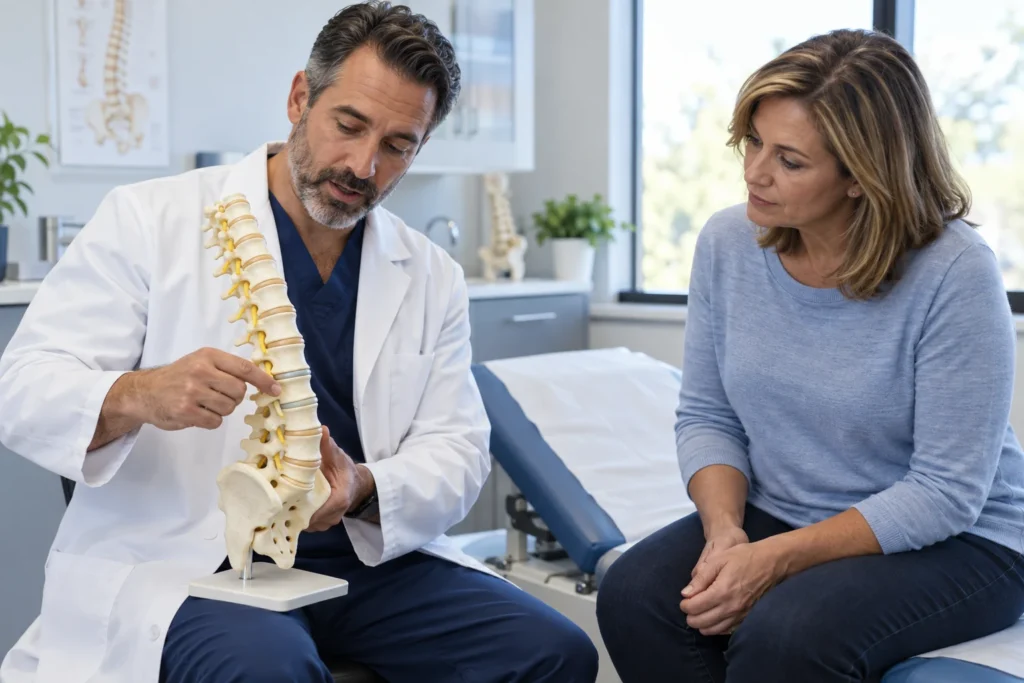
A review of cell therapies, PRP and biomaterials for lumbar disc degeneration, with clinical findings, safety considerations and research limitations.

Could PRP Help With More Than Back Pain? Lower back pain can make even simple activities, like sitting at a desk, bending down, or enjoying a walk, uncomfortable. For some people, the problem begins with the spinal discs, which act as cushions between the bones of the spine. When these discs begin to wear down,…
Learn about Things to Avoid with Degenerative Disc Disease, common considerations, established care, and questions to discuss with a licensed healthcare professional.
Contact us today and let Stemedix provide professional service accompanied by one of our Care Coordinators to ensure you have the best experience possible!